‘It’s a hotel,’ not a clinical facility, ex-medical director says of Garner psych center
READ MORE
‘Zero control’ at psych center
In 2009, state lawmakers at a hearing about mental health funding were told about a quarter of all children placed in group homes or psychiatric care facilities in the U.S. were in North Carolina. State inspections show the Garner facility was also cited this year for failing to prevent a 60-year-old patient with dementia from fleeing; for placing three boys ages 13 to 16 in restraints without notifying staff doctors; and for having no master treatment plans for eight boys. What happens at these treatment facilities? This is The N&O’s special report.
Expand All
When state regulators looked at medical records of a 16-year-old girl admitted to Strategic Behavioral Health’s psychiatric facility in Garner, they held little clue to what really happened to her in late September.
Security video showed a local police officer handcuffed her and put her into a padded “isolation” room. Then a nurse injected drugs considered chemical restraints into both of her arms. After the cuffs were off, the patient hit and kicked a second officer. Both officers grabbed her and pinned her to a wall. It wasn’t until then that two staff members tried to calm her down.
Staff showed “zero control” over the unit that night, one of the officers told state regulators. Patients attacked an employee, broke a window and refused to go into their rooms, officers said.
“Never been in the middle of a facility, jails, detention etc. with no staff trying to do anything in that situation,” one officer said.
No doctor signed off on the cuffs or the drugs within 24 hours, which is required after a restraint is applied. The nurse who gave the injections was on her second day working alone. She provided no evidence that she kept a close eye on the patient after drugging her.
That night of chaos featured numerous violations of state and federal rules guiding the care of patients at the for-profit facility for adolescents, state records show. State health officials now want to revoke the license for Strategic’s psychiatric residential treatment facility in Garner. Strategic is appealing and has submitted a correction plan to try to keep the 60-bed facility open.
Blue Cross and Blue Shield of North Carolina told Strategic in September it will not cover customers admitted there after learning of a ”potentially serious quality of care issue,” a letter the insurer sent to Strategic said. Last month, the state told Strategic to suspend admissions at the facility and recommended that the federal Centers for Medicare and Medicaid Services cut off funding by mid-December.
“It has been determined that your facility’s violations of the above Statute endanger the health, safety, and welfare of clients in your facility,” said Michiele Elliott, the acting chief of the state health department’s Mental Health Licensure & Certification Section in a letter dated Nov. 4. “Therefore, the Department intends to revoke your license.”
Those violations include a finding the CEO in charge of the facility, Evelyn Alsup, lacked the competence to run it.
State inspections show the Garner complex was also cited this year for failing to prevent a 60-year-old patient with dementia from fleeing its acute care facility for geriatrics; for placing three boys ages 13 to 16 in restraints without notifying staff doctors; and for having no master treatment plans for eight boys. A staff physician tasked with treating the eight boys spent weeks out of the country, connecting with them via videoconferencing.
Staff turnover has been rampant, with shortages in nurses, aides and physicians, state reports show.
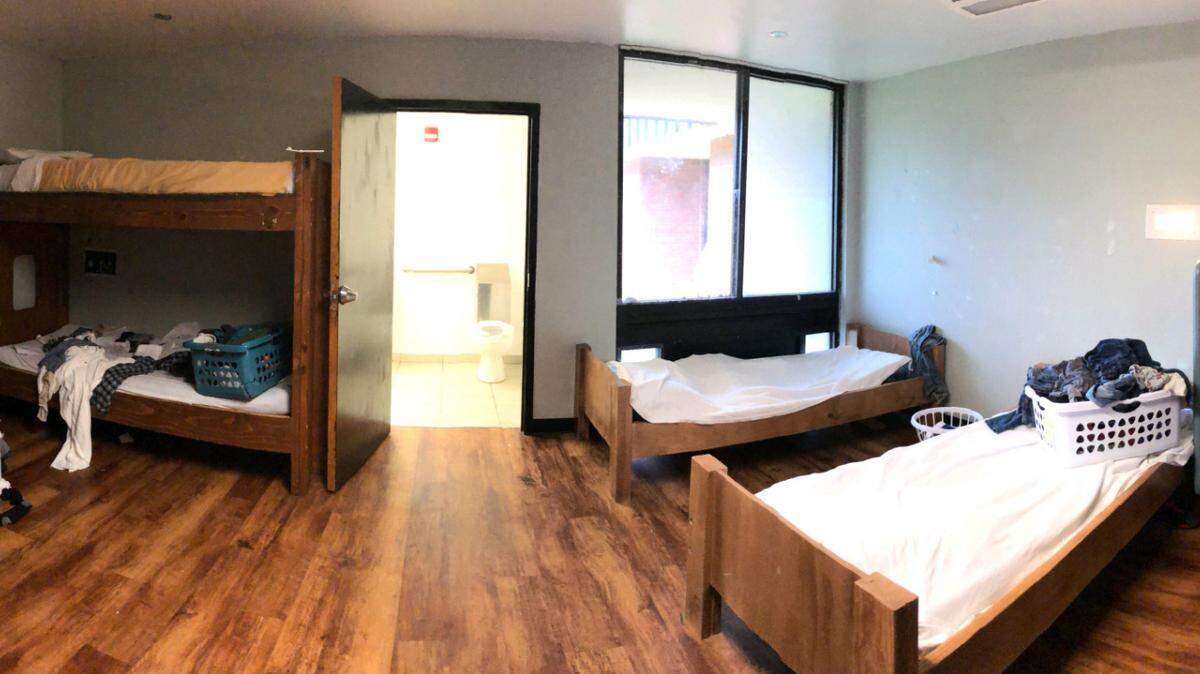
“Patient’s are not getting any treatment, only tele-psych and no therapy,” the site’s former chief medical officer told state regulators on Oct. 11. “It’s a hotel. It’s not a hospital.”
Issues at other facilities
A reporter’s phone calls to Alsup and officials with Dobbs Management Service of Memphis, Tenn., Strategic’s owner, were not returned. Mark Payne, DHHS’s director for Health Service Regulation, which oversees psychiatric care facilities, declined interview requests.
Dobbs Management is a family-run, private equity firm that owns or holds stake in eleven companies. Others are engaged in commercial truck sales, fast-food restaurants, beverage distribution, furniture manufacturing and disaster recovery. The Memphis Business Journal said Dobbs ranked fifth among private businesses in the area with gross revenues in 2020 of $1.4 billion.
Public records and news reports show problems with other Strategic-owned facilities in North Carolina.
Strategic runs the psychiatric center Carolina Dunes in the Brunswick County town of Leland. A series published by Gannett’s North Carolina newspapers – “Locked Away” – reported care issues at that facility too, including a state investigation into an employee accused of grooming a 14-year-old girl for sex. The company closed a third center it owned in Charlotte in 2018 after serious care and security issues emerged that jeopardized its Medicaid funding.
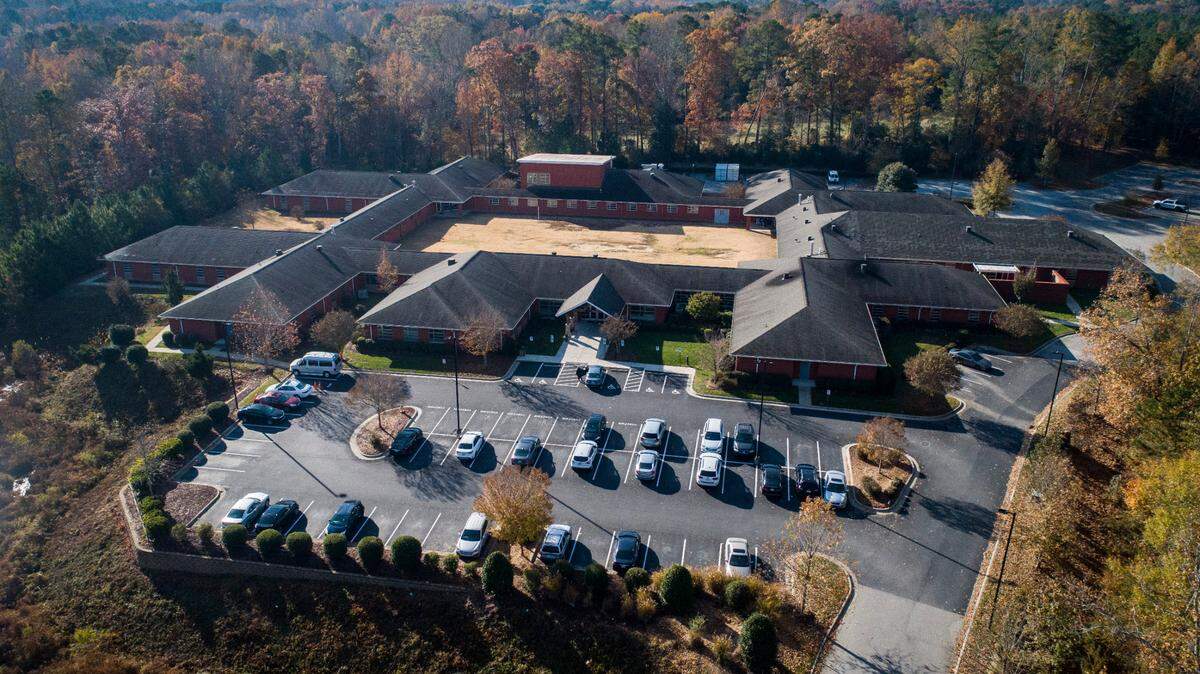
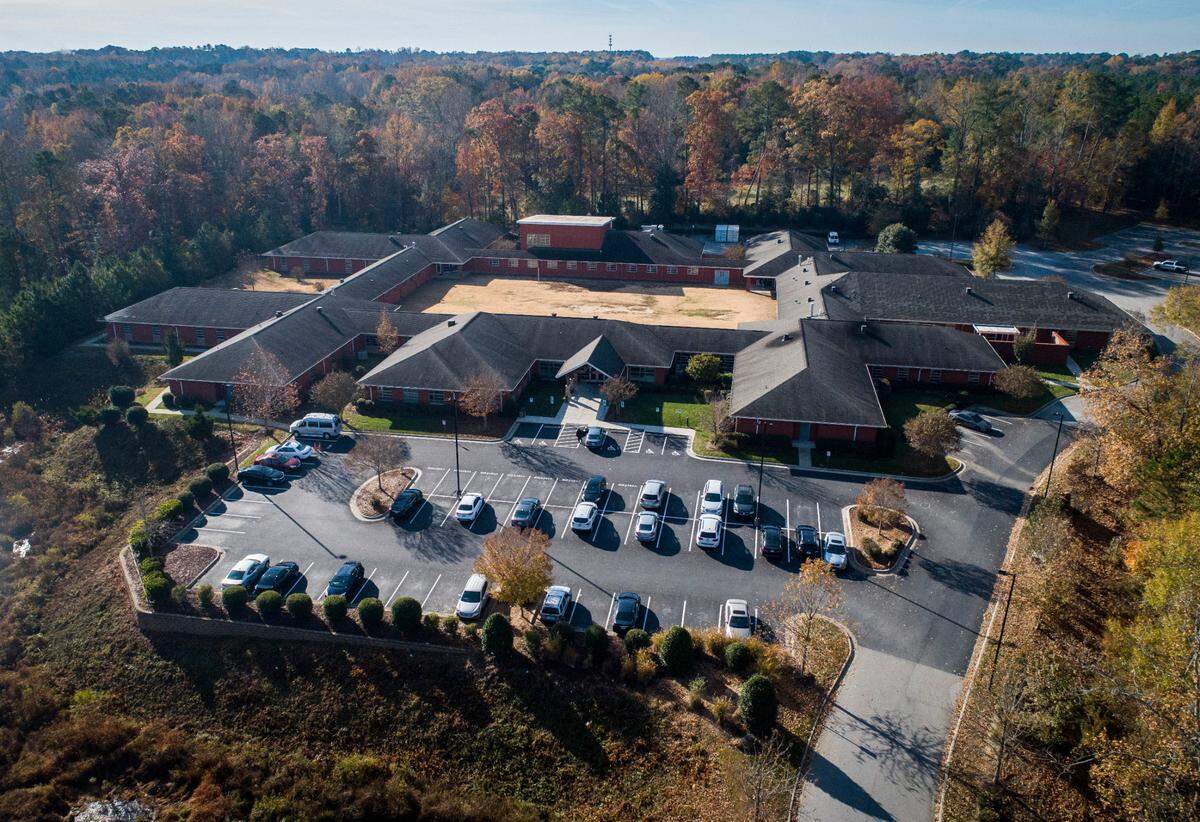
The Garner facility opened in 2012 in the Greenfield Business Park at 3200 Waterfield Drive. At the time, company officials said 250 people would work in the single-story brick building with several wings and a mostly walled-in courtyard where patients would spend time outdoors. The name of the facility is not on the sign at the entrance, just its corporate logo of interlocked puzzle pieces.
The state Department of Health and Human Services’ move to shut down the Garner center comes after years of violations that were resolved through fines and promises to do better, according to state records that include no names of staff, patients or police. The state had previously threatened to pull Medicaid and Medicare funding in 2014, but Strategic made fixes and the state relented.
State inspection reports since the facility opened show:
- In March, regulators discovered medical staff didn’t properly check four patients who had been chemically restrained through sedation and had given the wrong medication to one patient.
- In 2019, staff failed to keep watch over a 15-year-old girl with suicidal tendencies who attempted to strangle herself with hair ties and a sock. Staff also allowed a 13-year-old with diabetes to continue to use her insulin pump despite being alerted she might use it to overdose and kill herself.
- In 2018, two patients, ages 16 and 53, did not receive follow-up evaluations within 24 of hours being admitted, the facility was not providing patients’ families or guardians with their medical records in a timely fashion. And court hearings for two patients were not scheduled within 24 hours as required.
- In 2016, two separate state reviews of staffing found several wards lacking enough personnel. During one of those reviews facility officials admitted they were having a hard time filling positions.
- In 2014, the state found the facility didn’t properly supervise a 16-year-old sexual predator. He was housed in a special unit with boys who also had been diagnosed with sexual-related psychiatric issues, but the facility didn’t have enough space to provide them with single rooms as experts recommend. One boy he roomed with reported he had sexually assaulted him. The 16-year-old also punched another boy and broke his nose in a day room that didn’t have enough staff.
The Garner facility is one of several psychiatric facilities Strategic operates across the country. Strategic’s website includes employment opportunities at facilities in Iowa, New Mexico, Tennessee, Texas and Wisconsin, but the company does not report how many facilities it has. News reports show similar problems in some of those facilities as well.
Quinn’s story
In October, a national report by disability rights organizations, including North Carolina’s, found widespread neglect and abuse in for-profit residential psychiatric facilities for children in 18 states. The groups called for more community-based services that allow children to remain at home or in foster care, but many rural areas across the state lack them.
Lindsay and Neil Wilson found themselves in that situation when their son Quinn needed help three years ago when he was 10. He struggled with aggression and depression. After their son, who was large for his age, struck a principal at school, his parents took him to a local hospital where he told a police officer to just shoot him so he wouldn’t have to be there.
That prompted medical officials to push his parents to commit him to a psychiatric center. Strategic’s Garner facility had the closest available bed, the medical staff told the parents. It was nearly four hours away.
His mother rode in the patrol car to try to calm her son, while her husband followed in the family car. She gave Quinn her cellphone to let him listen to music and play games. Instead he looked up the facility online and read poor reviews. During his admission he cried and fought several staff.
She asked for more time to settle her son down. A male employee told her, “Ma’am, it’s time for you to pop your titty out of his mouth,” Lindsay Wilson said.
“I will never forget that moment,” she said in a Zoom interview.
The staff took her son. She cried for an hour at a gas station on the way home.
Lindsay Wilson and her husband returned to Garner every day to visit Quinn. They found him lethargic, his speech slurred from medications. A medical chart Lindsay provided showed Quinn had been given lithium, Thorazine and Zyprexa.
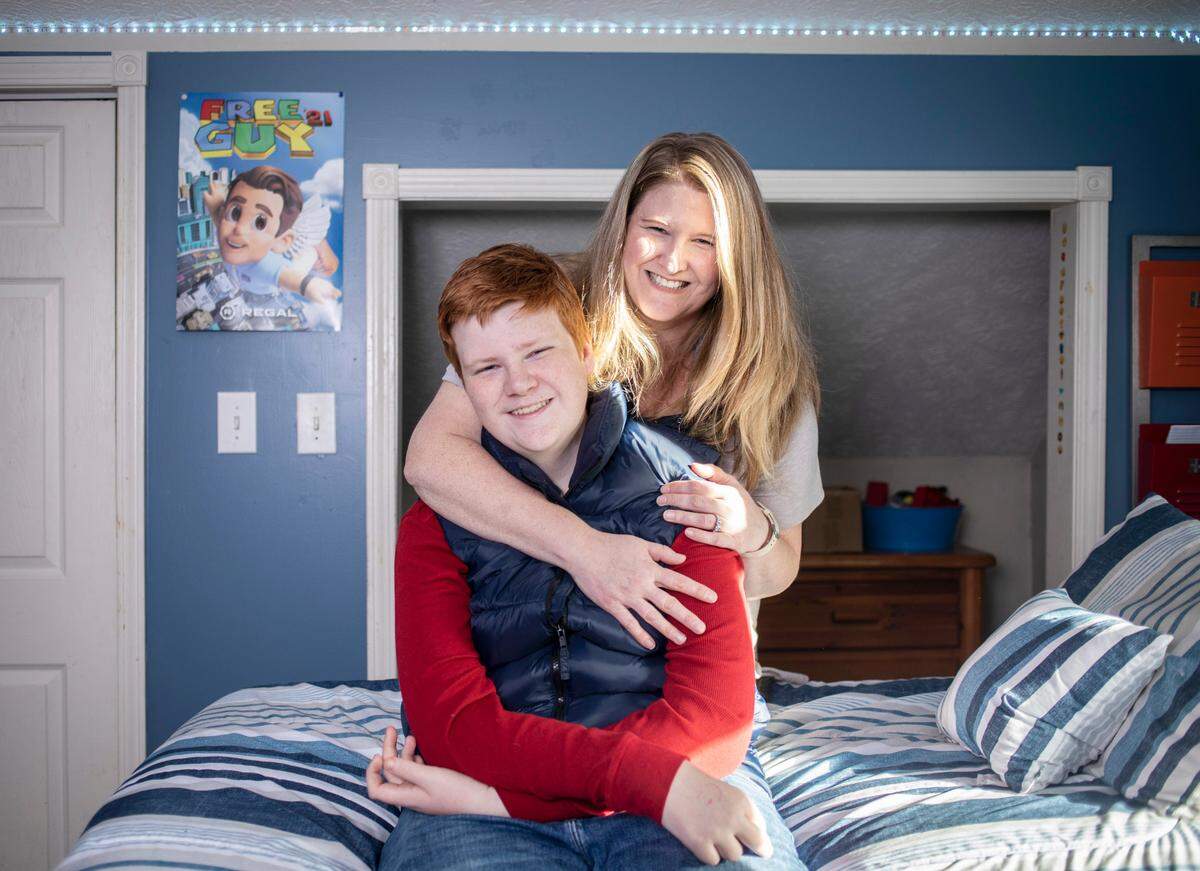
He cried a lot and was afraid of his surroundings. He told them he had been placed in a unit with boys three or four years older because he was a big kid for his age.
Quinn, now 13, said in the Zoom interview that the older kids picked on him. One day he walked into the bedroom he shared with another boy and found feces on his bed. Staff did nothing other than tell him to clean it up, he said.
At another point, a roommate punched him, and he punched back. An aide pulled them apart, but neither Quinn nor the roommate were assigned another room.
Quinn said he ended up sleeping in a day room to avoid confrontations with other boys.
He said he had one therapy session and only saw a psychiatrist via video conferencing. Lindsay produced a taped recording of a phone call with a psychiatrist who acknowledged he hadn’t seen her son in person. She did credit him with taking her son off another drug he had been prescribed before entering the facility. The drug, Latuda, wasn’t helping him.
His parents pulled him out after seven days, as soon as they legally could. An administrator tried to convince them Quinn should stay, warning them that their insurance might not pay if he didn’t, Lindsay said.
That only convinced them, Lindsay said, that Strategic cared more about the money than their son’s health.
When they got him home, they discovered Quinn’s kidneys weren’t processing the lithium, putting him at risk of kidney damage, Lindsay said. They took him off the drug. They credit intensive therapy offered through Youth Villages, a national nonprofit with a regional office in Boone, with getting Quinn back on track.
Quinn and his parents say he is doing much better in school, where he’s now in the eighth grade. But his mood quickly changes when he talks about his time at Strategic.
“It was just a horrible place,” he said, his voice trembling. “It was just terrifying.”
‘How can you bill?’
Joonu Coste is an attorney for Disability Rights North Carolina, a nonprofit that serves as a watchdog over health care facilities to ensure that those with mental and physical disabilities are treated properly.
She said the nonprofit has been tracking issues at the Garner facility since 2015 and assisting patients with complaints ranging from unsanitary conditions to little or no therapeutic services.
The lack of therapy “begs the question of Medicaid fraud,” she said, “because if you are not providing the treatment how can you bill?”
She said the handcuffing and drugging of the girl to restrain her in September never should have happened and put her in “imminent danger.” The facility’s former chief medical officer told regulators he hadn’t been informed of the incident until a colleague told him three weeks later. He said police should not have been called in.
“We are lucky that child survived,” Coste said, noting the report showed “no safety monitoring involved whatsoever.”
The circumstances at Strategic’s North Carolina facilities and others across the state speak to a systemic problem, Coste said. Too often, the state’s response is to lock up children who need psychiatric care, even sending them to out-of-state centers if North Carolina’s can’t take them.

In 2009, state lawmakers at a hearing about mental health funding were told about a quarter of all children placed in group homes or psychiatric care facilities in the U.S. were in North Carolina.
“That in itself tells you we have a cultural issue that needs to be looked at closely,” Coste said.
Strategic’s 60 beds for adolescents in its psychiatric residential treatment facility account for 13% of the 460 beds across the state. These facilities do not have a doctor on site all hours. The Garner center also has a psychiatric hospital with 32 beds for adolescents and 24 beds for geriatric care.
Operators of facilities like Strategic’s have options to challenge a move by the state to revoke a license. They can try to persuade state officials that they corrected violations, which leads to follow up inspections. They can also also request a hearing with a DHHS official or with the state Office of Administrative Hearings.
Coste said the severity of the violations coupled with the Garner facility’s troubled history should convince state officials not to give it another chance.
“My hope is the state does the right thing and says enough is enough,” she said.
This story was originally published December 5, 2021 at 6:00 AM with the headline "‘It’s a hotel,’ not a clinical facility, ex-medical director says of Garner psych center."