Midway across the Atlantic, this pilot was the last to land in North America on 9/11
READ MORE
9/11: 20 voices, 20 years later
Collectively, the ordinary and the extraordinary stories of that day show a shared history and an understanding of what it was like to be in America on 9/11.
Expand All
Most people can tell you exactly where they were the morning of Sept. 11, 2001. For Guy Gullick, it was 36,000 feet above the middle of the Atlantic Ocean, sitting at the controls of an Airbus 330.
A pilot with U.S. Airways, now American Airlines, Gullick was one of three cockpit crew members on his flight to receive a brief but direct text message via the Aircraft Communication Addressing and Reporting System instructing all planes to land immediately.
“The message we got simply said that there was an event in the U.S., and we would not be landing there today. There were no other details — good or bad,” Gullick said.
He was flying 265 passengers from Rome to Philadelphia and had three more hours before they would cross the Atlantic. A decision had to be made: Turn around and go back to Europe, land at one of the mid-ocean alternates (Iceland, Greenland or the Azores) or find another spot in North America.
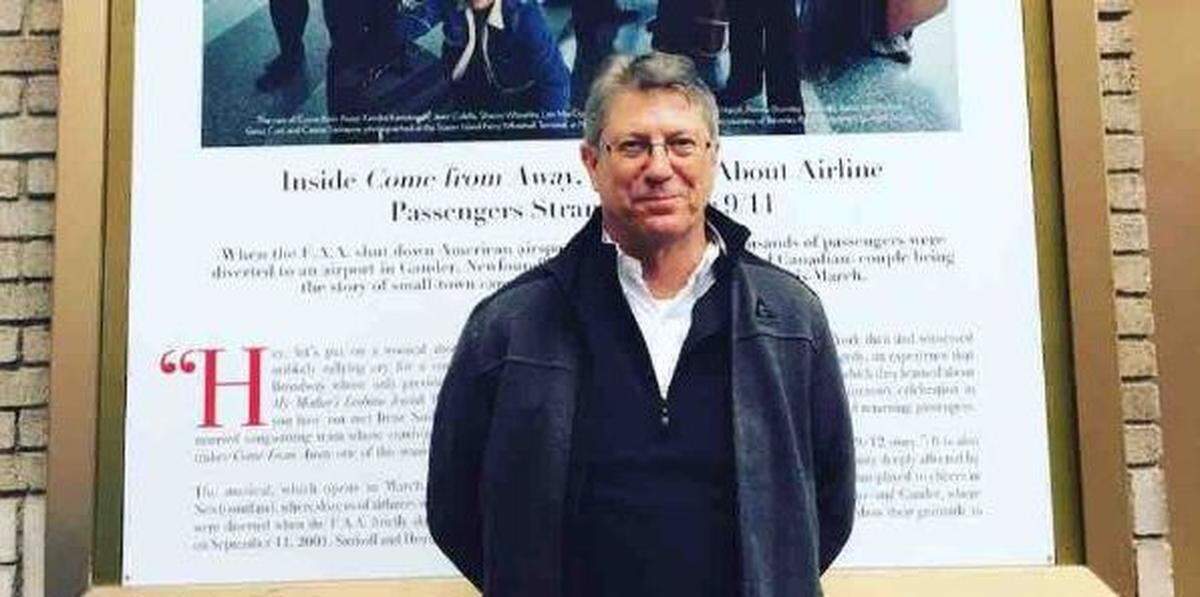
“There was a lot of confusion at the beginning. We were hearing chatter from other planes that were in the area, but no one really had any information. We were able to pick up a news broadcast from the BBC over a high frequency radio after the second building was hit. So we had that information when we made our decision to head back to North America,” Gullick said.
The cockpit crew updated the flight attendants, with a promise that the information would not be shared with passengers for the safety and well being of everyone on board. The crew turned off the in-flight phones that could be found in the back of each headrest at the time to prevent anyone from making a call and finding out about the attacks.
A place to land
“It wasn’t until five minutes before that we knew where we were going to land. Gander (in Newfoundland, Canada) didn’t think it had room for us — it’s an enormous amount of passengers to take in — but we were running out of places to go, and they ultimately allowed us to be the last plane to land there that day,” Gullick said. “No. 38.”
The plane was flying above a cloud layer, so its descent went largely undetected by passengers until it began to emerge from the clouds. Gullick’s co-pilot communicated to passengers that they were going to stop in Canada “for fuel.”
Once on the ground, the crew explained the unexplainable. Via the plane’s PA system, the passengers were told about the attacks in New York, the attack on the Pentagon and the plane that had crashed in Pennsylvania.
“We felt much more comfortable once we were on the ground. Our concerns were really in the air. No one knew if we had sleepers on board or any other type of device,” Gullick said, referring to possible terrorists on board. Prior to 9/11, cockpit doors did not lock. They were not bulletproof, reinforced or monitored by cameras as they are today.
For the next 31 hours, those 265 passengers and crew members had to remain on board the plane on the tarmac. Though the doors could be open to allow for fresh air, no one was allowed to deplane without a thorough search from a customs agent. A team of customs agents had to be flown in to assist with the process.
The Capital of Kindness
The population on these 38 planes — 6,700 people — had nearly doubled the size of Gander in a matter of hours.
It was during these 31 hours and in the days that would follow that the residents of Gander — since dubbed the Capital of Kindness — began to shine. In fact, their hospitality was so heartwarming that a book, and eventually a Broadway musical, ”Come From Away,” (now available on Apple TV+) was created to tell the story of the town’s welcoming in the days following 9/11.
“The Canadian people are amazing. They made sure the bathrooms were dumped, they brought us food, drinks — anything they could find. One thing people don’t often think about is we carry a lot of freight on these planes, and each one is usually carrying animals. There were all kinds of animals on board the planes in Gander — gorillas, you name it — and they had to figure out how to keep them alive, too,” Gullick said.

While the passengers sat through more than a day of boredom, uncertainty and frustration, the people of Newfoundland put together an emergency plan to help care for unexpected visitors.
The passengers on Gullick’s flight were taken to Lewisport, about an hour away, where they stayed in a junior high school that was being supported by the Salvation Army. In addition to food, drink and sleeping quarters, the volunteers hooked up hundreds of phones to enable people to be in touch with their loved ones.
Meanwhile, the flight crew had to stay in a hotel close to Gander to receive security updates. “The people from a local hospital provided buses that allowed us to go visit passengers and have dinner with them each day and give them updates as we were getting them,” Gullick said.
Five days later, the group received news that they would be able to continue their journey back to America. Since Gullick’s flight was the last one in — blocking the other 37 planes — it was the first one out.
While everyone was cautious about having to get back up in the air again, they were also happy to be returning home to loved ones. “It was really a joyous occasion,” Gullick said.
This story was originally published September 7, 2021 at 6:30 AM.