‘None of it made sense.’ On Sept. 12, his class was packed with people looking for answers
READ MORE
9/11: 20 voices, 20 years later
Collectively, the ordinary and the extraordinary stories of that day show a shared history and an understanding of what it was like to be in America on 9/11.
Expand All
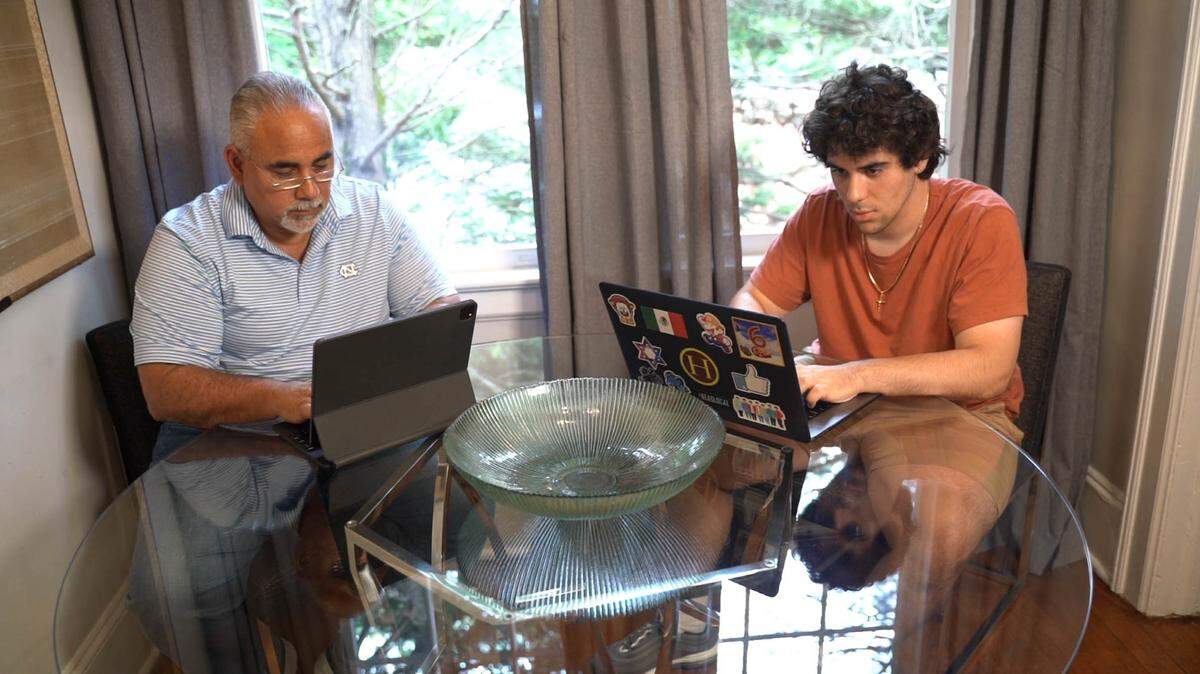
In the fall of 2001, professor Steve Sabol began teaching a course at UNC Charlotte called the History of Modern Asia. The semester started with an overview of geography and people but quickly took a turn on Sept. 12.
“When I went to class that day it was full — which isn’t always the case — and they all wanted to talk about the day before. None of it made sense to them. Many had never even heard about the Taliban or al-Qaida. So we spent two weeks reading about and discussing that region — Afghanistan and Pakistan,” Sabol said.
As a Russian and Central Asian historian, Sabol has studied and traveled extensively through the “stans” so his knowledge is both deep and personal. Shortly after 9/11, his friend and colleague, renowned historian Dan Morrill, said to him — “This may be your Sputnik,” referring to the extensive education programs the U.S. invested in following the Sputnik launch in 1957 to boost knowledge and education on space exploration. But rather than fighting an intellectual war following 9/11, the U.S. engaged in a much different kind of war.
“As we have gotten further out from 2001, many of my students have spent their entire lives in a war with Afghanistan that they don’t necessarily care about or understand or see as a threat. Unless they have served, it hasn’t touched their lives. They are interested because of how it has influenced their lives, but it is not emotional,” Sabol said.
As an educator and historian, Sabol said history is about answering the question of why, not how. “We watch these specials year after year, and even though we know the outcome, we can’t help but watch them. The job of historians is to create a compelling narrative about the why,” Sabol said.
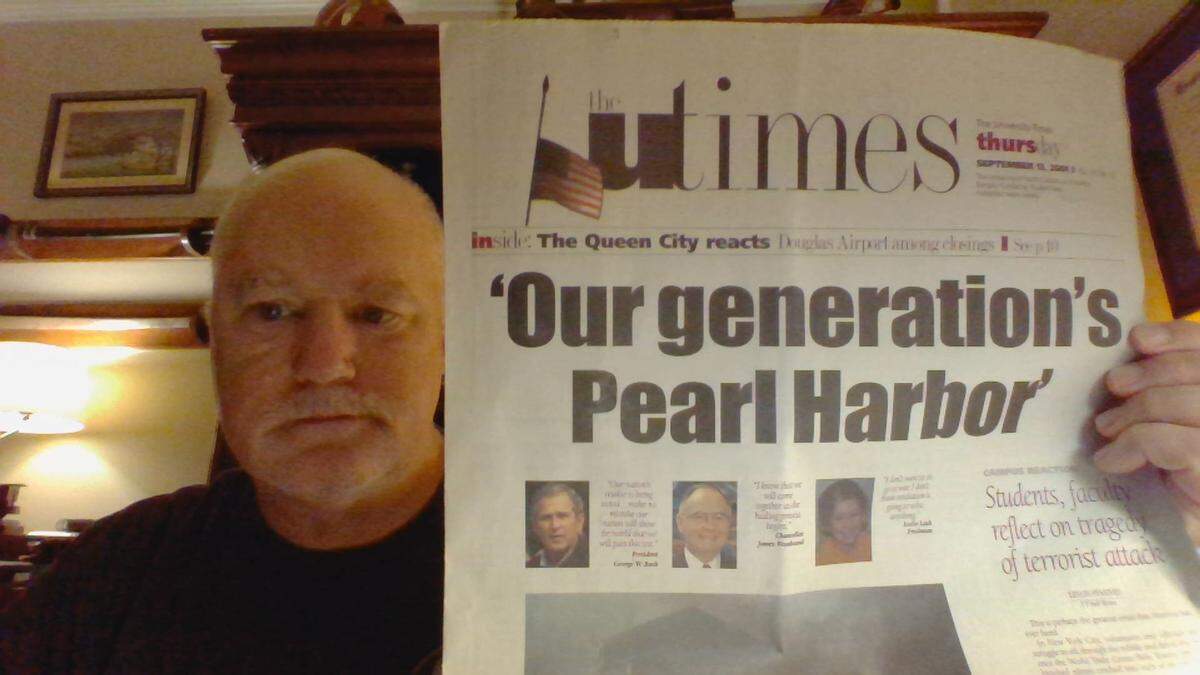
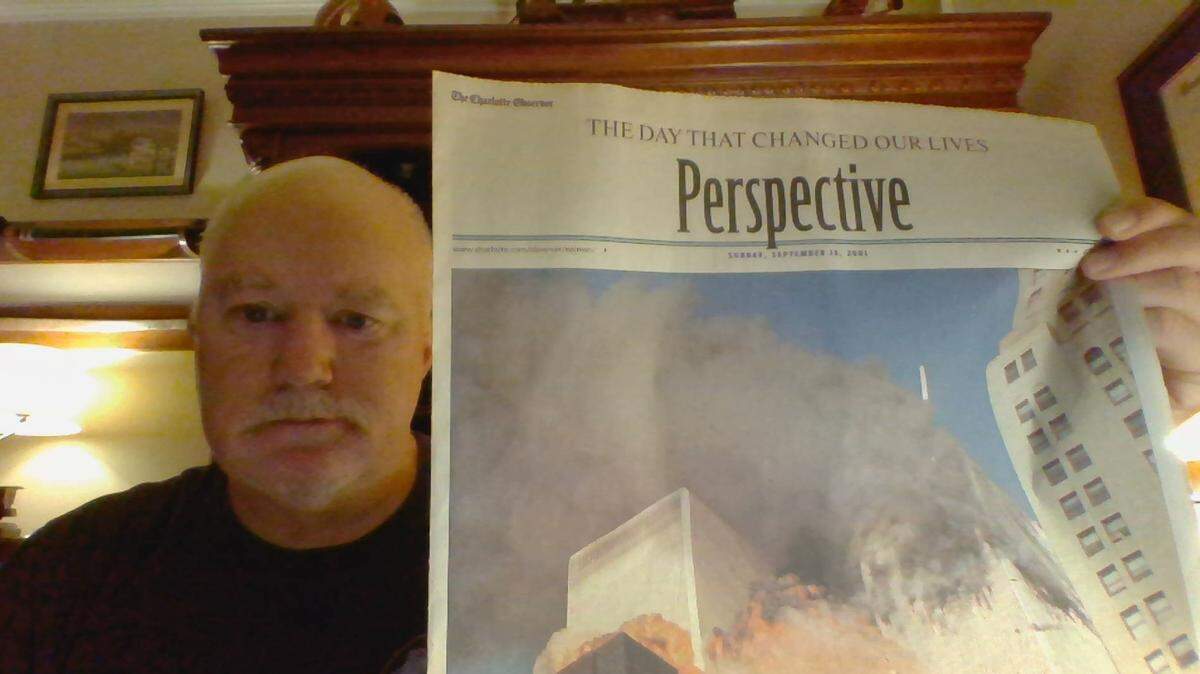
A relisher of artifacts, Sabol has a collection of newspapers from various momentous occasions throughout history, and 9/11 is no exception. He has shared with classes his copies of The Charlotte Observer and the university paper from the days following the attacks.
“It is a tangible demonstration of ‘This is how we felt in that moment, on that day.’ We didn’t know who did it; many had never even heard of Osama bin Laden,” Sabol said.
He also discusses the cultural implications of 9/11 with students — in particular as it pertains to individuals of Middle Eastern descent. “If you look at American history, it is not the first time in a moment of crisis where we have had these sorts of reactions against ‘the other,’ where we fear an entire group or hold them responsible. Germans, Japanese, Bolshivicks — you can go back throughout history. So when students say ‘How could we be so stupid to hold all Muslims accountable?’ (The answer is) ignorance. Ignorance can create a lot of hostility. I relate it to a tweet or a post that you may put out and then later regret. It was our collective tweet as a country,” Sabol said.
The current crisis in Afghanistan
The recent withdrawal of U.S. troops from Afghanistan and the unfolding humanitarian disaster present new challenges for Sabol in teaching about the region. “America’s ‘longest war’ — in my view — is not the conflict in Afghanistan, but rather the counterterrorism struggle since 9/11. Afghanistan was merely a theater in a longer, broader conflict,” Sabol said.
“One key component that I’ll focus on teaching is not what U.S. national interests were at stake in Afghanistan, but America’s important geopolitical interests in Afghanistan.”
Sabol’s greatest concern for the Afghan people moving forward is a civil war. He believes that the U.S. withdrawal from the region does not alter the region’s “geopolitical tug-of-war” that will continue to ensue.
Despite his own anger about what he calls “negligent fallout” from U.S. withdrawal, he believes the Afghan people are strong. “People persevere in times of crisis; Afghans are no different,” Sabol said. “When we teach about diversity, I wonder if it wouldn’t be better to teach commonality — we share more than not.”
This story was originally published September 7, 2021 at 6:30 AM.