LGBTQ+ advocates blast Charlotte council for inaction on anti-discrimination ordinance
READ MORE
Charlotte 2021 nondiscrimination ordinance
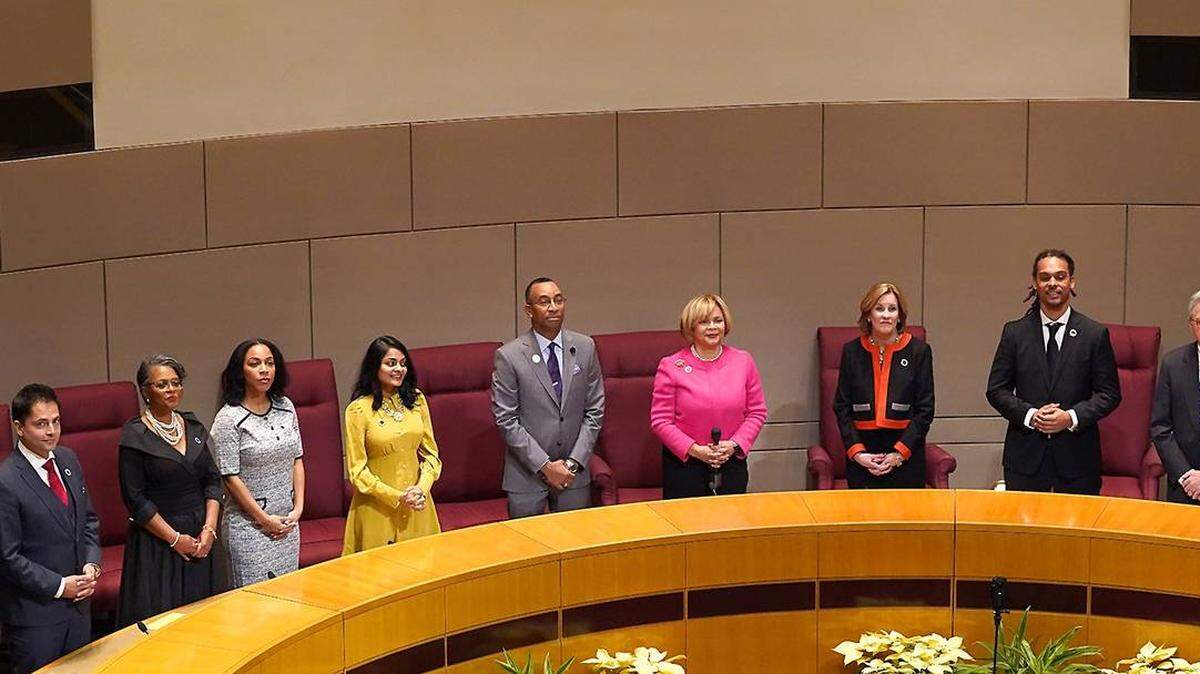
The Charlotte City Council, five years after HB2, passed an updated ordinance prohibiting non-discrimination based on gender identity, and numerous other areas.
Expand All
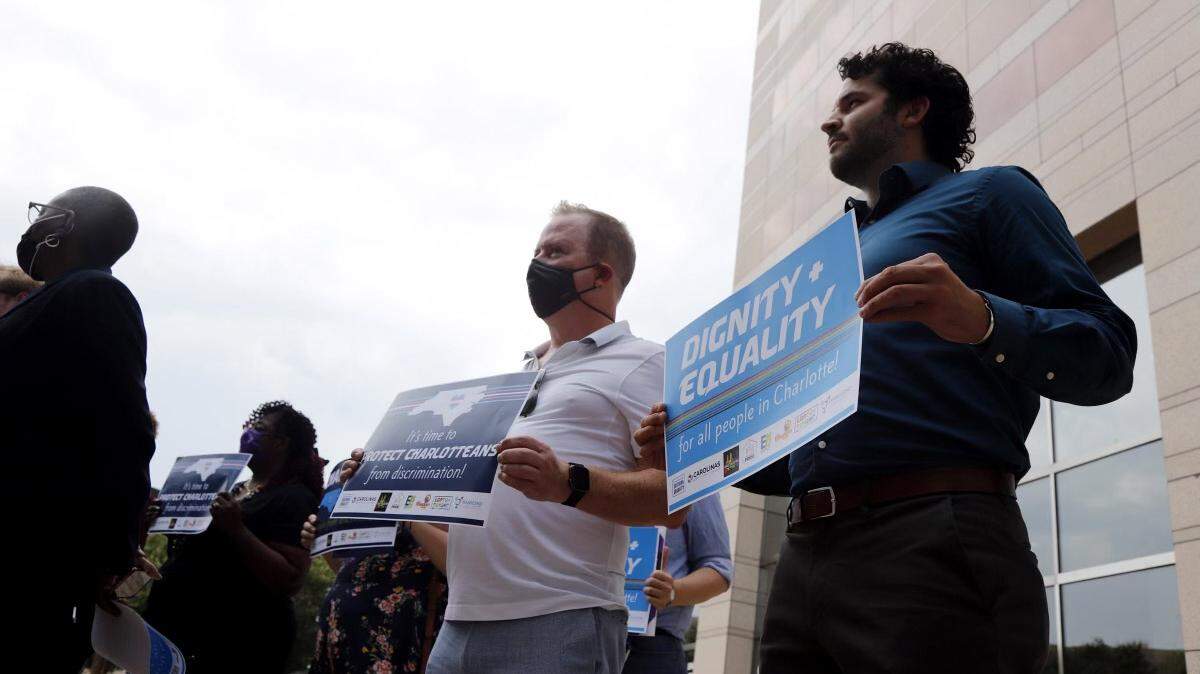
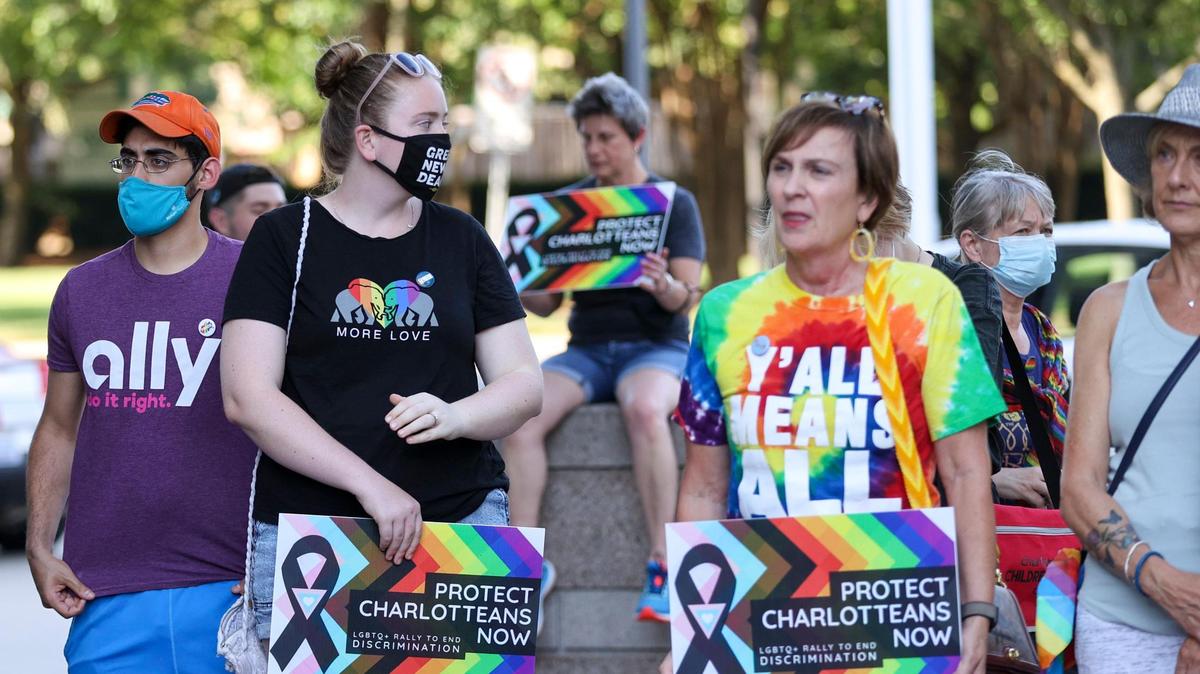
Just steps outside the building where the Charlotte City Council met Monday night, LGBTQ+ residents, advocates and allies called on those elected leaders to pass a nondiscrimination ordinance.
“We have a courage shortage in there,” said Jenny Jaymes-Gunn, a NOW Charlotte board member, motioning toward the Government Center. “And if they don’t wake up, they’ll get evicted next year.”
Cities across the state have passed their own protective policies since the portion of House Bill 142 that barred North Carolina cities from adopting local nondiscrimination ordinances expired in December. Orange County was the first in January, followed by the cities of Greensboro and Durham and the Orange County towns of Chapel Hill, Hillsborough and Carrboro.
Local advocates and leaders have been calling on the city of Charlotte to pass or expand their own since December, and a petition calling on the city to take action has gained 1,500 signatures, organizers of the rally said Monday night.
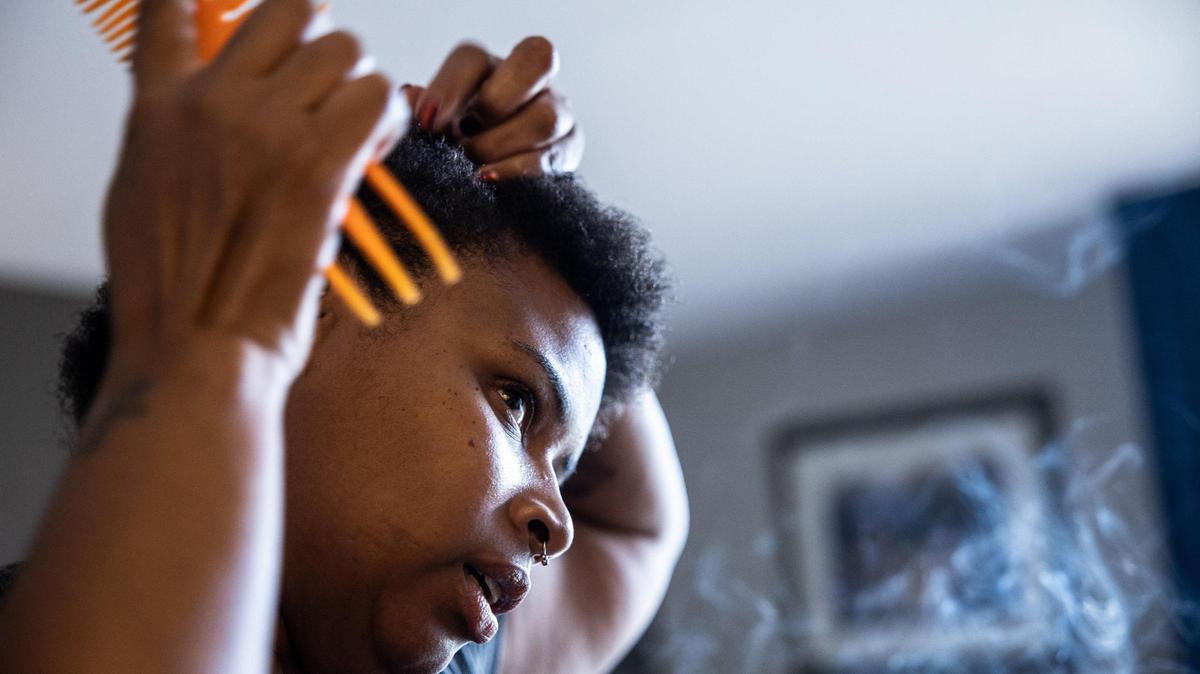
Mecklenburg County commissioners unanimously passed an LGBTQ-inclusive nondiscrimination resolution in February. The resolution, which also protects natural hairstyles, is largely symbolic. It does not outline enforcement actions for people who discriminate against individuals based on their gender or sexual orientation, among other backgrounds. And unlike other policies, the commissioners did not jointly craft the resolution with the city council.
Charlotte Mayor Vi Lyles said in late January that the city is working on expanding its nondiscrimination ordinance to include LGBTQ+ people. A city spokesperson said Monday that there is no update on the creation of such an ordinance.
“Charlotte is the crown jewel of North Carolina. At least follow, for Christ’s sake. Don’t live in fear,” Jaymes-Gunn said. “I’m embarrassed… If they can’t face up to the new dawn, we give them a sunset next year.”
Local NAACP leader Rev. Corine Mack condemned local leaders for their lack of action and called on the community to recognize intersectional hate.
“If you love God, you know that God is love,” Mack said. “Love must be the foundation of everything that you do. So my question, always, is in this city, where is the love? Charlotte intentionally harms people… How can we all be hurt by the same group of people and not stand together?”
Transgender women killed
In 2016, Charlotte City Council expanded its existing non-discrimination ordinance to include LGBTQ+ protections, prompting backlash in the form of House Bill 2 from the state legislature. Not only did HB2 restrict cities from enacting anti-discrimination ordinances, it also required people to use the public restroom corresponding with the gender on their birth certificates.
After much national furor and debate, it eventually was repealed and replaced with HB 142.
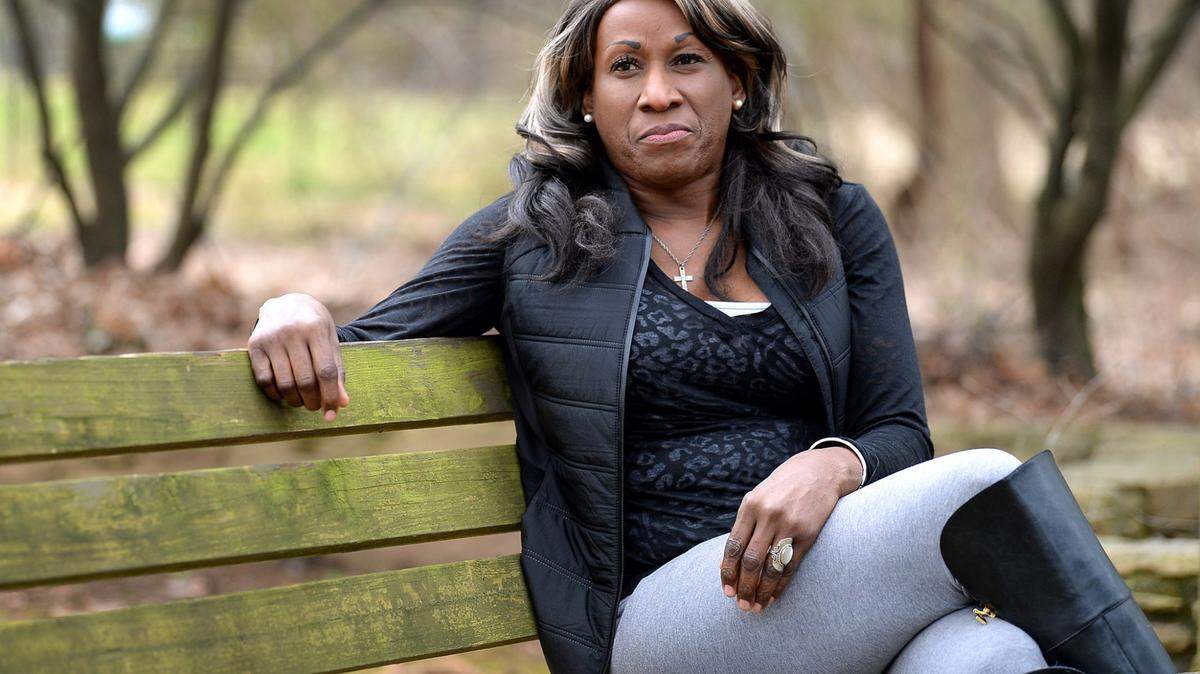
Advocates say the recent murders of Black transgender women only increase the urgency and need for the ordinance. Since 2016, at least six Black transgender women have been killed in Charlotte, including Jaida Peterson and Remy Fennell, who were fatally shot in April in the span of two weeks.
The Human Rights Campaign recently called Charlotte the second deadliest city in the United States for transgender people.
Speakers at Monday’s rally drew attention to the return of Charlotte’s four-month-long Pride Festival, which was announced last week, and asked council members to show the same public support for the ordinance as they did for the revenue-producing festival.
“[Pride] is not just a celebration. It is not just a party. It is a reinforcement and opportunity for us to recognize the struggle that our community has had, the intersections that our communities are a part of,” Charlotte Pride president Daniel Valdez said. “Our movement was born out of police violence and brutality, and was led by our amazing trans people of color in this community, and we must not forget that.
“We must do right by them. We must pass a nondiscrimination ordinance.”
Cameron Pruette, president of the LGBTQ Democrats of Mecklenburg County, said the community will keep showing up until they see results.
“Our elected officials love to show up to Pride… Pride can become a protest,” he said. “And I believe we have over 100,000 LGBTQ Charlotteans now. We will be voting.”
This story was originally published May 24, 2021 at 8:56 PM.