Charlotte’s new nondiscrimination law: Who it covers and what comes next
READ MORE
Charlotte 2021 nondiscrimination ordinance
The Charlotte City Council, five years after HB2, passed an updated ordinance prohibiting non-discrimination based on gender identity, and numerous other areas.
Expand All
Editor’s note: This story was updated Tuesday, following Monday’s vote on a new nondiscrimination ordinance.
Charlotte has a new nondiscrimination law, applicable to large and small businesses, which includes expanded protections for LGBTQ+ people, people who wear natural hairstyles, and others.
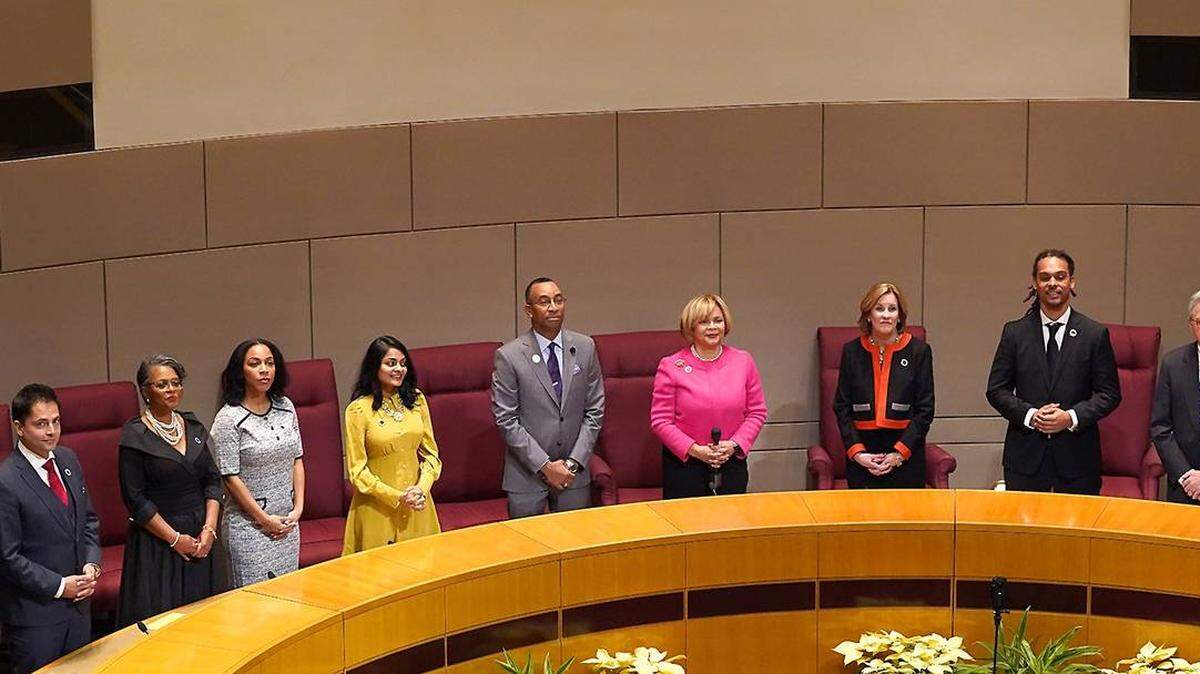
The City Council unanimously approved the new nondiscrimination ordinance — commonly called a NDO — Monday night.
Here are answers to key questions about the changes.
Who does the nondiscrimination ordinance protect?
Charlotte’s nondiscrimination ordinance has been in place since 1968.
The original NDO prohibits discrimination in places of public accommodation based on “race, color, religion and national origin.” Nondiscrimination protection on the basis of sex was added later.
The NDO amendments approved by council on Monday expanded protections under “protected classes,” defined as a person’s gender, ethnicity, age, familial status, sexual orientation, gender identity, gender expression, veteran status, pregnancy, natural hairstyle or disability.
A proposal to add political affiliation to the list failed in a vote on Monday.
What are the protections?
The change in Charlotte’s local law goes beyond nondiscrimination protections currently covered in state and federal laws by recognizing a longer list of protected characteristics. In so-called “places of public accommodation,” a person cannot be refused service. And businesses cannot advertise that certain patrons, due to protected characteristics, are unwelcome.
In the NDO, a place of public accommodation is defined as “a business, accommodation, refreshment, entertainment, recreation, or transportation facility of any kind ... whose goods, services, facilities, privileges, advantages or accommodations are extended, offered, sold or otherwise made available to the public.”
The ordinance prohibits discrimination against visitors and customers in those settings.
Additionally, the NDO applies to city of Charlotte employees and contractors, and introduces new workplace nondiscrimination protections for residents employed at small businesses.
For larger businesses, federal and state workplace laws still apply but the local law expands the definition of who can file complaints of employment discrimination.
Are there exemptions?
The nondiscrimination ordinance does not apply to religious organizations, including those with paid employees where a condition of employment requires adherence to tenets of the religion.
There’s also an exemption for private clubs or membership-based groups that are generally not considered open to the public.
Charlotte’s ordinance applies to private businesses larger than 14 employees — although some workplace discrimination complaints would utilize state or federal legal avenues, not the local process for filing complaints.
What does it say about employment?
Initial NDO drafts from council members differed on which employers would be covered. The city’s attorney has warned that any attempt to regulate private employers could draw lawsuits.
In Monday’s vote, the City Council approved including all private employers, as well as city workers and government contractors, under the ordinance.
The workplace protections prohibit employment discrimination — such as firing, or refusing to hire or promote — based on a worker’s race, gender identity, sexual orientation or anything else that falls under a protected class.
State and federal laws already generally prohibit employment discrimination based on race, religion, sex and national origin for employees at businesses with 15 or more workers, but natural hair is not included and there’s been uncertainty in the courts over whether those laws protect transgender people.
There’s a provision in the draft NDO language that says it’s not considered discrimination if a company doesn’t hire an unqualified applicant for a job. A person can be fired, the ordinance says, “when there is a legitimate non-discriminatory or non-retaliatory reason to terminate employment.”
How did we get here?
In 2016, Charlotte City Council voted to expand its nondiscrimination ordinance to include LGBTQ+ protections — specifically prohibiting discrimination against transgender people. North Carolina state legislators responded with the infamous House Bill 2, referred to as the “bathroom bill,” which was designed to prevent transgender people from using bathrooms that correspond with their gender identity.
After significant backlash, HB2 was repealed and replaced with a similar law that still prevented North Carolina cities from passing their own protective ordinances but the limitation on municipalities expired last year.
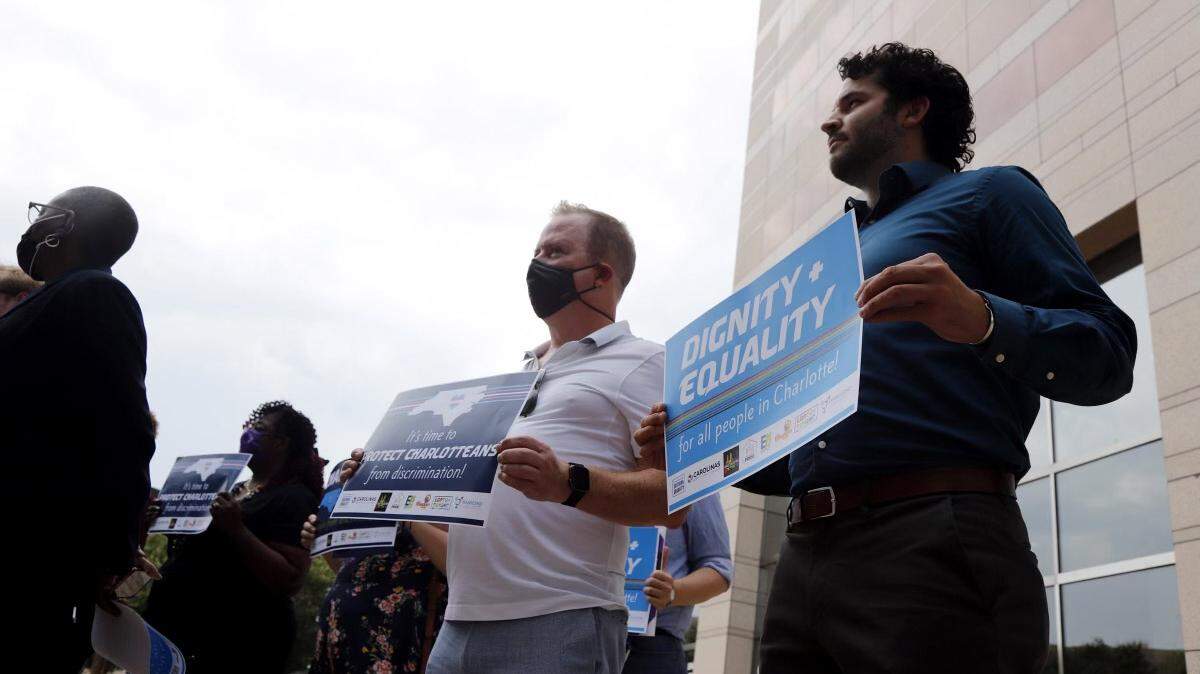
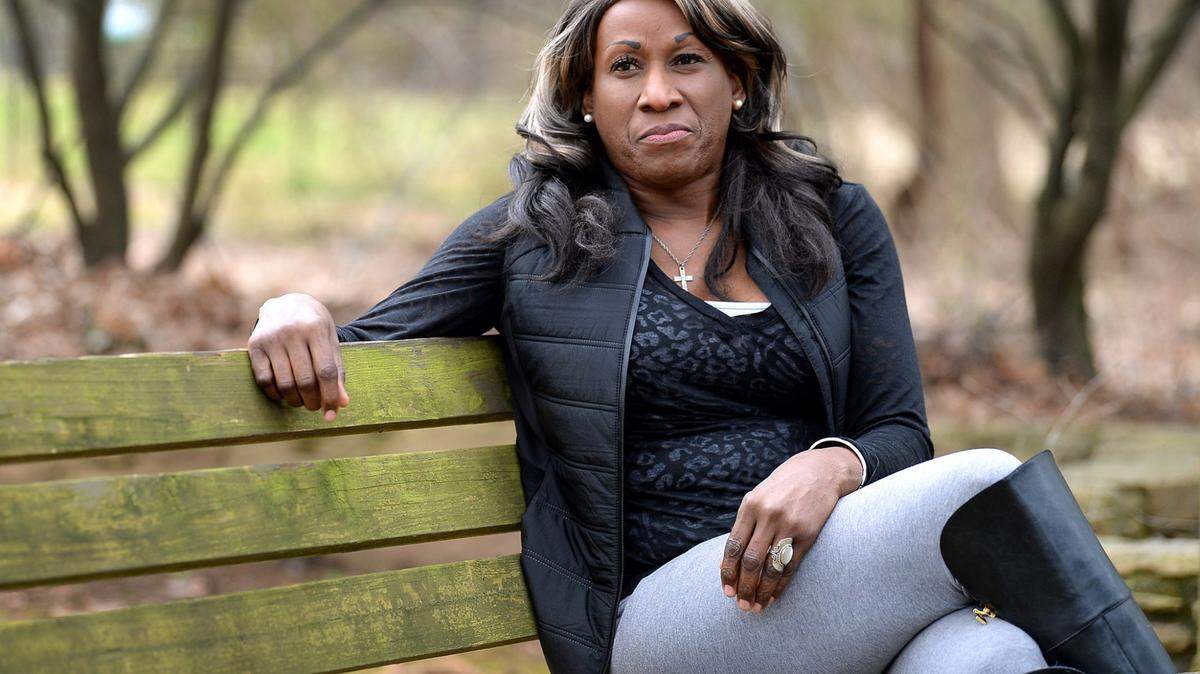
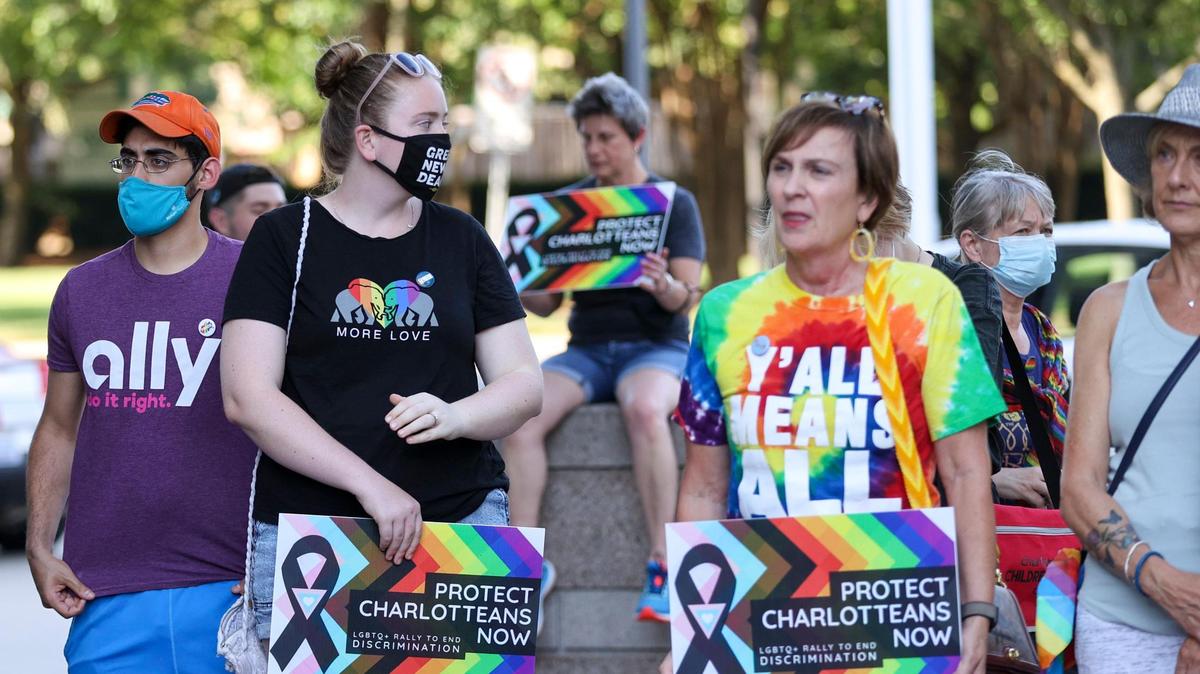
Since then, communities across the state have adopted their own local nondiscrimination laws. Before Charlotte’s vote, activists protested the City Council’s slow movement and called for more urgency, citing the recent local spike in murders of Black transgender women.
Are bathrooms a factor?
No. The nondiscrimination ordinance doesn’t and can’t regulate public bathrooms. Although HB2 was repealed, North Carolina law, through House Bill 142, specifically tells municipalities they cannot pass ordinances pertaining to public restroom use.
Currently, no language in state law prohibits people from using the public restrooms they wish.
Is there data on workplace discrimination?
In cases that go through state or federal court, an employee may first need to file their complaint with the Equal Employment Opportunity Commission.
Although total EEOC complaints from North Carolina workers have generally decreased over time, “color”-based discrimination — which is defined as treating someone unfavorably because of skin color complexion — has increased, federal data show.
There were 3,439 total complaints in North Carolina in fiscal year 2020, about two-thirds of them race-based or sex-based.
How will it be enforced?
There’s been some disagreement among council members on how the city should handle penalties and enforcement under the NDO. A coalition of LGBTQ+ state and local groups recently said the current NDO under consideration is too weak, specifically because there are no proposed fines associated with violations.
As approved, complaints under the NDO will go to the city of Charlotte’s Community Relations Department.
If a complaint meets basic requirements — filed within 180 days of the incident, by a person in a protected class against an employer or business covered under the NDO — an investigation will be done. The city’s community relations department will notify the business or organization of the complaint and pending investigation.
In cases where alleged discrimination would be covered by state or federal laws, an employee may first be required to file his or her complaint in the courts or with the EEOC.
Under the local ordinance, if discrimination is found, the director of Charlotte’s Community Relations Committee will begin a conciliation process, similar to mediation.
If that fails, the case goes to a public hearing, and if wrongdoing is again determined, conciliation will again be attempted.
A final failure to reach an agreement results in a referral to the city attorney’s office.
At an Aug. 2 meeting, Newton pushed for fines to be tacked on to ordinance violations. Mayor Lyles on Monday night referred the NDO’s enforcement mechanism to the Budget and Effectiveness Committee, which will develop recommendations for the full council to consider.
“Other cities such as Durham and Asheville have added penalties and enforcement to their ordinances — and Charlotte should do the same,” the statement from the LGBTQ+ coalition reads. “Without these mechanisms, the ordinance will only be a suggestion, no more powerful than a resolution.”
How prominent are NDOs nationally?
As of January, at least 21 states, Washington D.C. and 330 municipalities have passed laws prohibiting discrimination against LGBTQ people, according to the Movement Advancement Project. The extent of the protections varies widely.
Some ordinances cover private employment, housing and public accommodations, while others only cover one or two of those arenas. Some states, like Maryland, Maine and Massachusetts, have statewide rules prohibiting discrimination based on sexual orientation and gender identity.
Others, like Pennsylvania and Florida, do not have explicit statewide protections, though state agencies or the attorneys general have said they interpret existing protections against sex discrimination to include sexual orientation and gender identity.
Two states, Arkansas and Tennessee, have laws preventing passage or enforcement of local nondiscrimination ordinances, according to the Movement Advancement Project.
What’s next?
Most of the ordinance will go into effect on October 1, 2021.
However, the provision regarding employment discrimination will be enforced starting January 1, 2022.
The Mecklenburg Board of County Commissioners unanimously passed a protective policy in February. But since there is no enforcement component, it is largely symbolic. It’s expected that county commissioners may soon look to adopt a similar law.
Observer reporter Will Wright contributed to this report.
This story was originally published August 9, 2021 at 9:33 AM.