How Charlotte went from HB2 fight to wide support for LGBTQ+ protections
READ MORE
Charlotte 2021 nondiscrimination ordinance
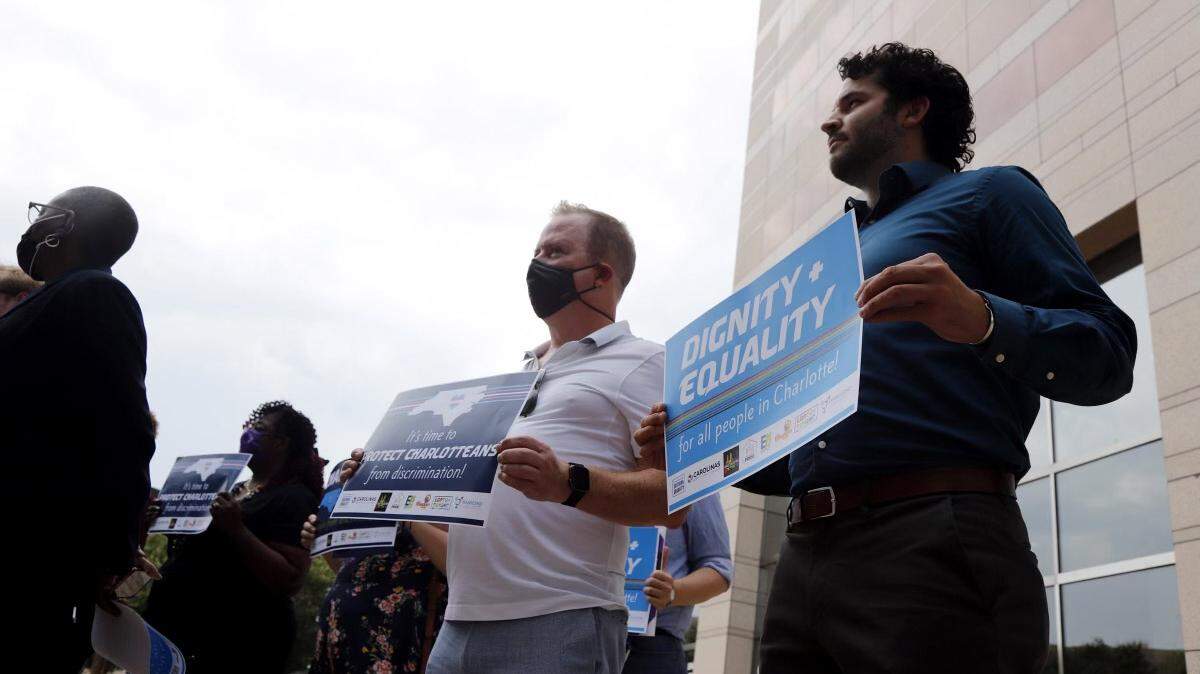
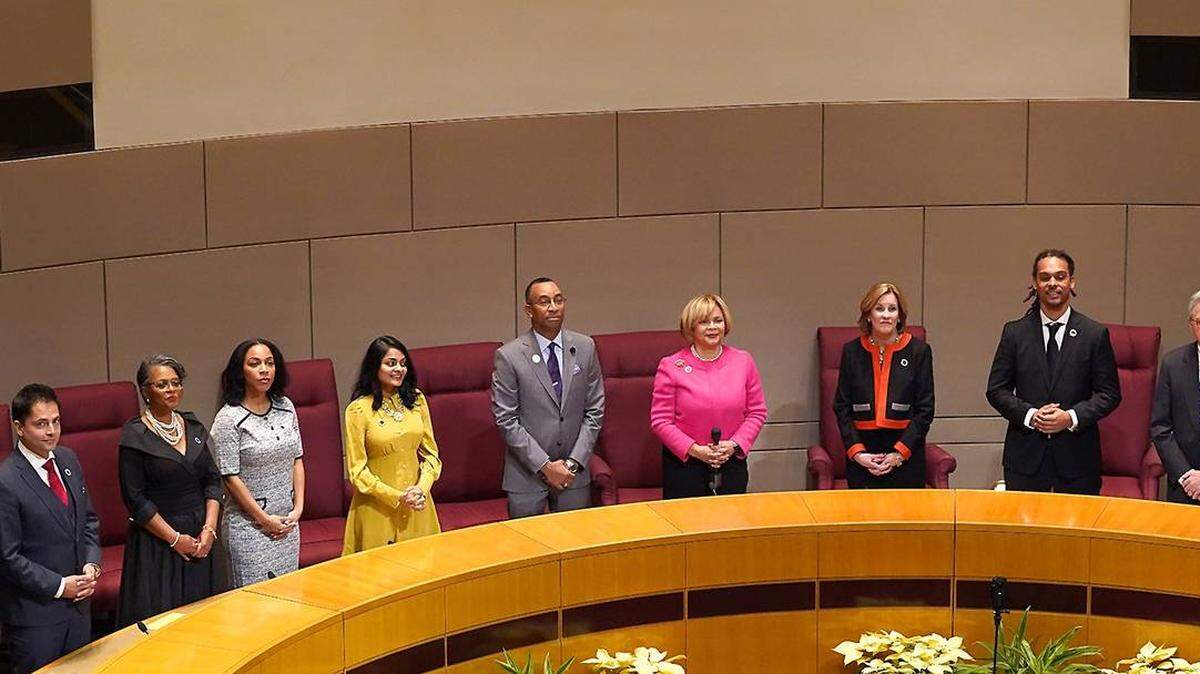
The Charlotte City Council, five years after HB2, passed an updated ordinance prohibiting non-discrimination based on gender identity, and numerous other areas.
Expand All
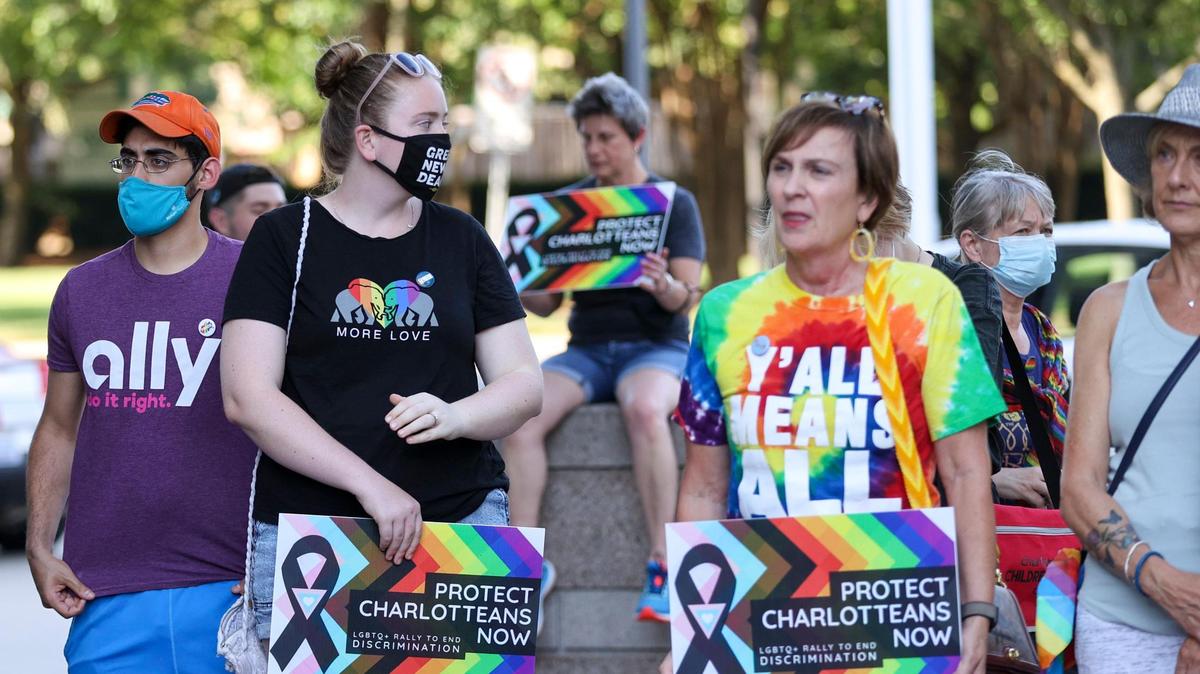
The new nondiscrimination ordinance in Charlotte could have passed without Republican help — but the unanimous vote and vocal support, especially by one Republican on City Council, mirrors a remarkable shift in public opinion.
Just six years ago, the Charlotte City Council voted down a nondiscrimination ordinance similar to the one that passed unanimously on Monday. Five years ago, the council passed one, over the opposition of four members (but the local law was later invalidated by North Carolina’s bathroom bill, called HB2).
Monday marked the first time that Republicans on the council have sided with majority-Democratic colleagues in Charlotte to expand LGBTQ protections, including making it unlawful to fire an employee based solely on their sexual orientation or gender identity, or any other characteristic in the more-broadly defined “protected class.”
Councilman Greg Phipps, a Democrat who voted against the ordinance in 2016, said on Monday that the discussion around the new ordinance was more “substantive,” and that it “didn’t get hijacked by one particular controversy,” referring to bathroom bill legislation.
The removal of that piece, combined with growing favor for nondiscrimination ordinances generally, likely contributed to the readiness of Republicans and hesitant Democrats to jump on board.
The unanimous vote reflects what polling shows is a dramatic shift in public opinion on LGBTQ+ rights and protections — though there is an urban-rural divide on the topic.
In just the six years since the council took its ‘no’ vote, public opinion has shifted considerably on nondiscrimination ordinances in nearly every corner of American life, according to polling released in March by the Public Religion Research Institute.
In the South, 77% of urban residents and 76% of suburban residents said they support the measures, compared to 72% of people in rural areas, according to the Public Religion Research Institute poll.
Just 7% of all respondents said they were “completely against pro-LGBTQ policies.”
“Urban and rural differences have surpassed regional differences in our state,” said Chris Cooper, a political science professor at Western Carolina University. He added that the shift “is fairly recent, and I do think that it is an increasing driver of North Carolina politics and politics more generally.”
Clash over religious freedom
Members of the public who spoke out against the measure on Monday generally focused on religious freedoms, and whether small businesses would be forced to violate their firmly-held beliefs, like by providing a service for a gay wedding.
This, typically, is where a larger divide occurs among Republicans and Democrats, and among conservatives and more liberal or moderate Republicans, according to public opinion polling.
Charlotte’s ordinance includes an exemption for religious organizations, which was pushed for most prominently by Republican councilman Tariq Bokhari and agreed to by Democrats.
Republicans in urban areas, like councilmen Bokhari and Ed Driggs, “have to acknowledge where they are, what their constituents feel comfortable with,” said Michael Bitzer, a political science professor at Catawba College. “If they want a Republican voice in Charlotte, that’s the way they’ve got to play the game.”
Meanwhile, rural Republicans and even Democrats have to play the same game, and a significantly larger portion of their constituents are likely to be concerned about those religious liberties even while supporting LGBTQ+ protections in employment, housing and public accommodations.
Among Republicans polled by the Public Religion Research Institute, there’s growing support for the type of business discrimination addressed in Charlotte’s NDO. The poll from 2021 shows 42% of Republicans oppose allowing small businesses to refuse to serve gay and lesbian people for religious reasons, up from 36% in 2018. Among white evangelical protestants, 46% also said they are against allowing small businesses to refuse service.
The responses from Democrats show that 73% oppose allowing businesses to refuse service, down from 77% in 2016.
Of the members of the public who spoke out against the ordinance during Monday’s meeting, their grievances centered almost entirely on the issue of religious freedom.
Jill Coward, a Union County resident and the North Carolina state director for the conservative Concerned Women for America, told the council that she did not wish to see anybody discriminated against, but that “At the same time, we must speak out on our religious liberties that I believe is at stake.”
The council’s unanimous vote showed that the evangelical line of conservatism “doesn’t play well in urban areas,” even for Republicans, Bitzer said. “You go into a rural county, you go into a surrounding suburban county, I don’t think you would find that.”
Charlotte and LGBTQ+ equality
From the passage of HB2 in 2016 to today, Charlotte has been known nationally as one of the key battlegrounds for LGBTQ+ protections. Though the same debate has taken place across the country, the weight of the state legislature’s response to the council’s last ordinance showed that — despite growing public approval — nondiscrimination for transgender people was far from a won battle.
The 7-4 ‘yes’ vote in 2016 is not a perfect comparison to the vote on Monday. Chiefly, the new nondiscrimination ordinance does not regulate bathrooms. The bathroom issue famously sparked outrage among state legislators, who responded with House Bill 2 and subsequently drew outrage among transgender people, their allies and numerous corporations who refused to give business to the state.
Whether there will be considerable pushback to the newest ordinance, even though it passed with the approval of both Republican councilmen, is still unclear.
“Fairly or unfairly Charlotte has been known as the epicenter of these fights,” Cooper said, “and for the council to come together unanimously is a striking statement.”
Councilman Larken Egleston, a Democrat, said on Monday that if you had told anyone on the 2015 or 2016 councils that the measure would receive unanimous approval this time around, “they would be skeptical.”
“The fact that we are simply debating the nuances and the wording and specific clauses of an ordinance but generally agreeing that these protections are needed,” he said, is something “that we as a council and a city should all be proud of.”
Support for these ordinances rose seven percentage points in the past five years among Democrats, from 78% to 85%, and five percentage points among independents, to a high of 78%. Every part of the South, from Texas to North Carolina, showed broad support in the recent polling.
With same-sex marriage equality, the rise in approval is even more striking. A decade ago, fewer than a third of all Republicans said they supported same-sex marriage. The approval rate is now just above 50%. Among Democrats, support rose from 58% in 2011 to 76% in 2021. Independents grew in favorability from less than half to more than 70%.
“I cannot think of another issue where opinion has shifted so quickly and among every group,” Cooper said. “It’s a sea change.”
This story was originally published August 12, 2021 at 6:00 AM.
.jpg)