Jeff Jackson pledges to be ‘shock of good faith.’ Is it enough for NC voters?
READ MORE
North Carolina U.S. Senate race
With the November election ahead, the candidates campaign across the state.
Expand All
Partisan politics divided Malcolm Duff’s family right down the middle. It frayed relationships that were built on shared blood — the friction so intense that it caused Duff, a retired construction worker in Onslow County, to leave his church.
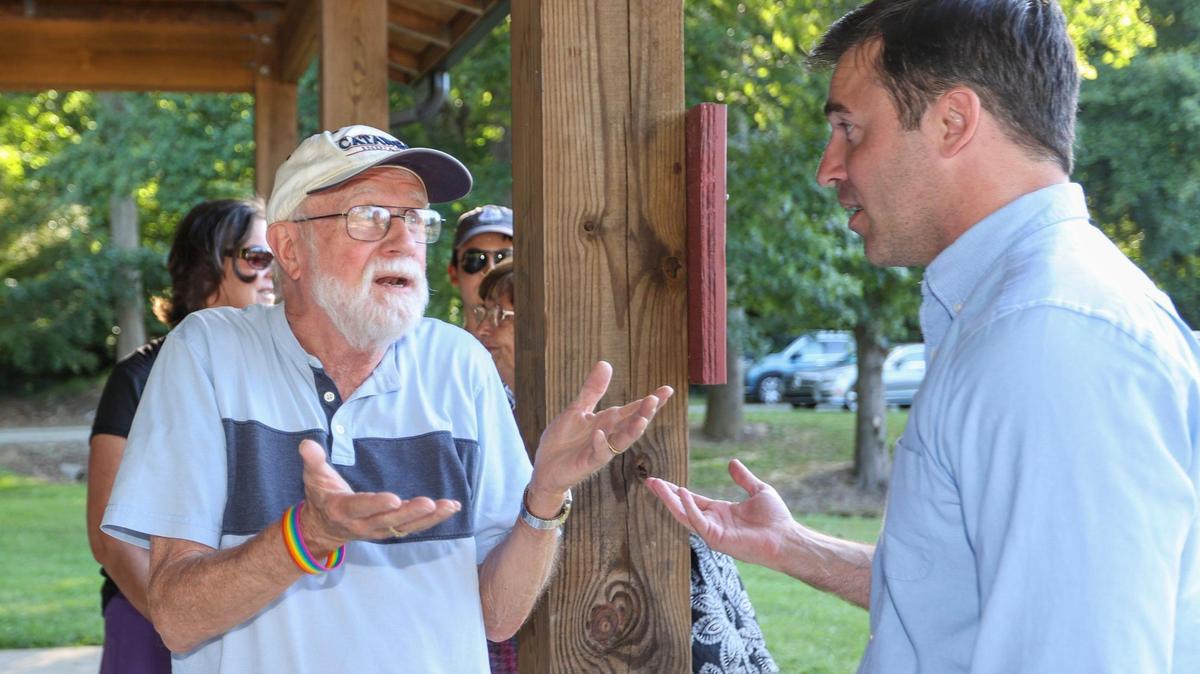
A few weeks ago, Duff found a shaded spot at a town hall stop scheduled by Democrat Jeff Jackson’s Senate campaign, and put a question to him: As senator, what would he do to stop the misinformation that is helping to fuel this divide?
Like many Americans, Duff worries that political polarization is hurting the country, and families like his, in ways that could become permanent. He blames much of the problem on misinformation coming from the right.
Jackson told him that misinformation would be a hard problem to fix, but that politicians can craft policy in such a way that at least curbs the potential for deceit. He said the Green New Deal, for example, is broad enough that it could easily be targeted by misinformation campaigns, and that his environmental platform would be crafted in a way to avoid that.
“He hit all the right points,” Duff said after the event.
Crowds on Jackson’s campaign trail — which aims to hit 100 counties in 100 days — came prepared with questions that hit on everything from how our elections should be conducted to whether the government should help fund community newspapers. His strategy, to get as much in-person interactions with voters as possible, has brought crowds numbering as many as several hundred and as few as two dozen.
They represent just a sliver of the overall population. People who attend political town halls — especially months before a primary — are generally more civically engaged than the average voter. Still, their questions reflected a dissatisfaction among voters on the performance of government.
Jackson has spent his campaign using that dissatisfaction to gain the trust of voters. His primary message is rooted in the idea that he can restore a sense of professionalism and honesty to Washington that some feel has been lost. He couples that message with policy points that most moderate Democrats support: passing new voting rights legislation; ending gerrymandering; and supporting the right of workers to form unions.
But it is unclear if moderate campaigns will lead the Democrats to success in the upcoming midterms. Katrina vanden Heuvel, a columnist for The Washington Post, wrote in May that partisanship tends to trump the performance of the party in power. Biden’s plan to beat the Republicans, she wrote, is “act big and boldly.”
In the primary, though, voters will tend to lean more to the political extremes of their parties, said Chris Cooper, a political science professor at Western North Carolina University.
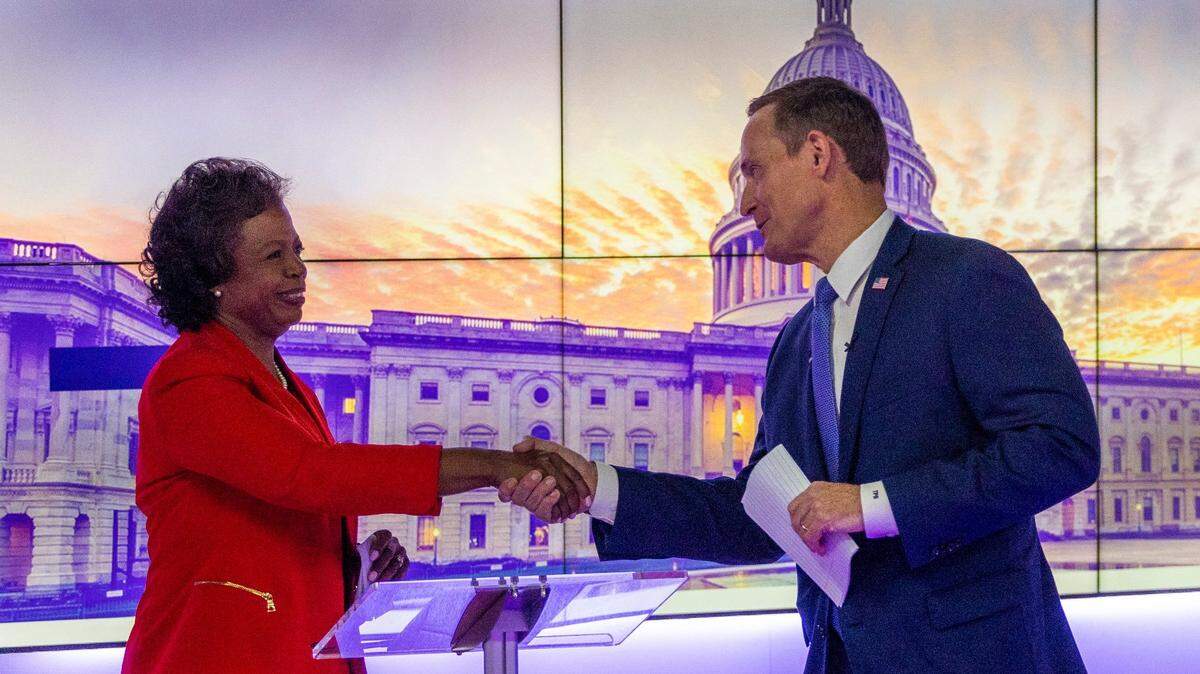
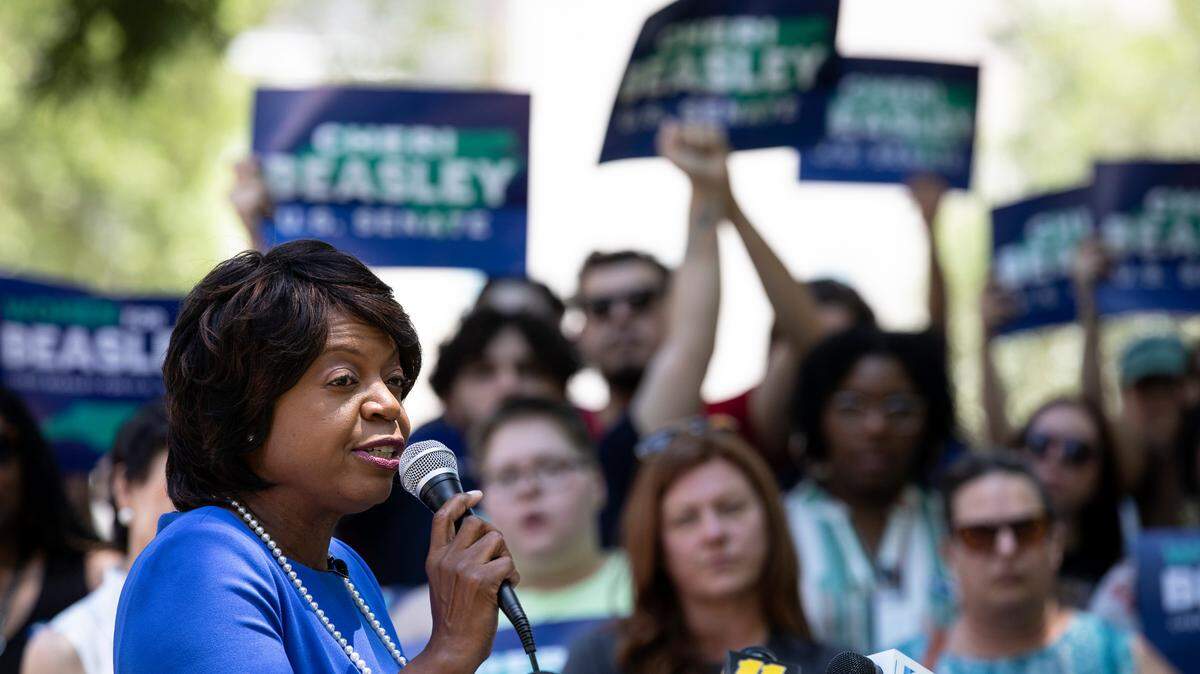
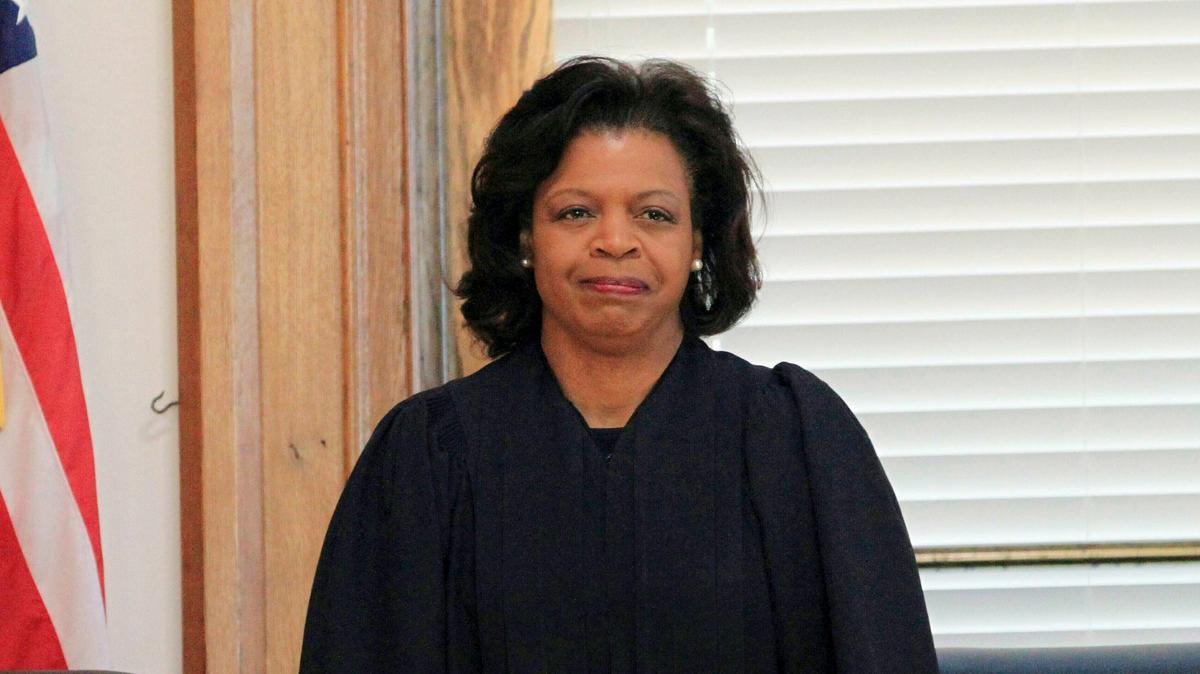
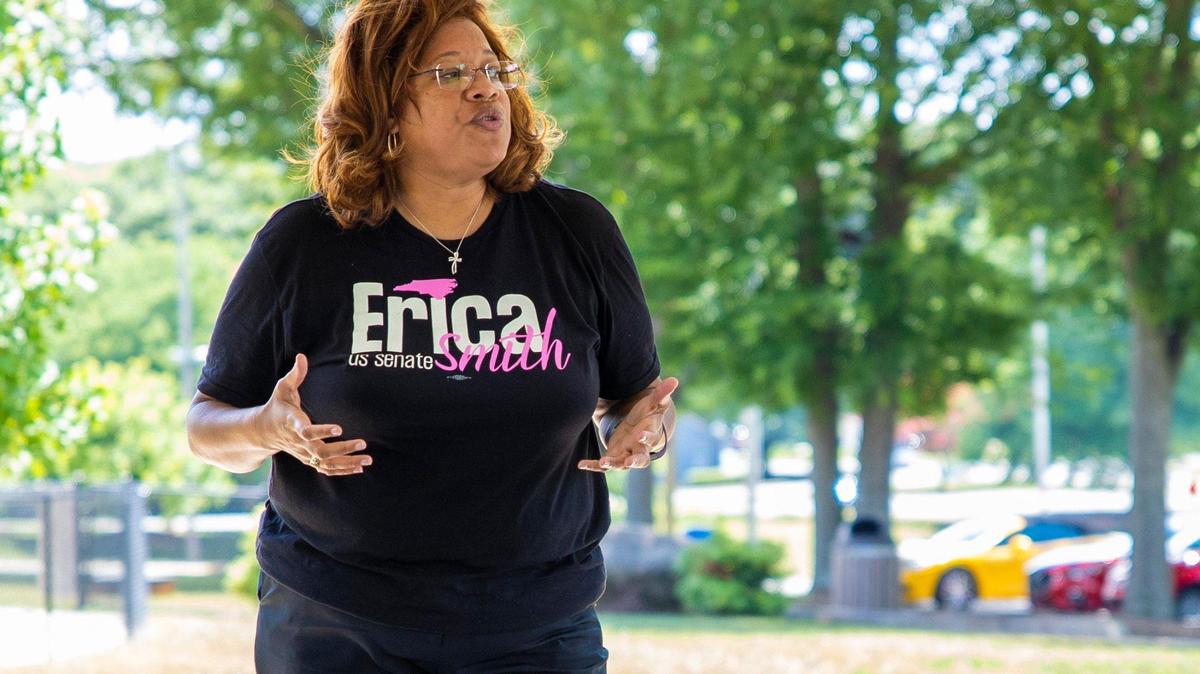
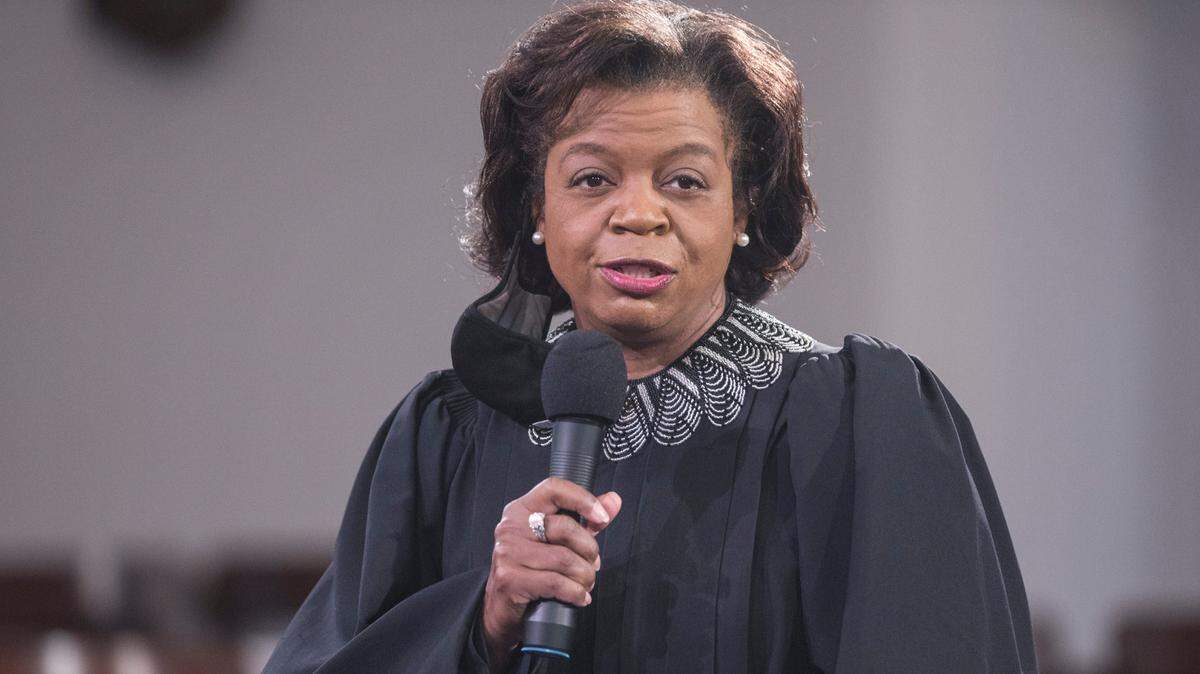
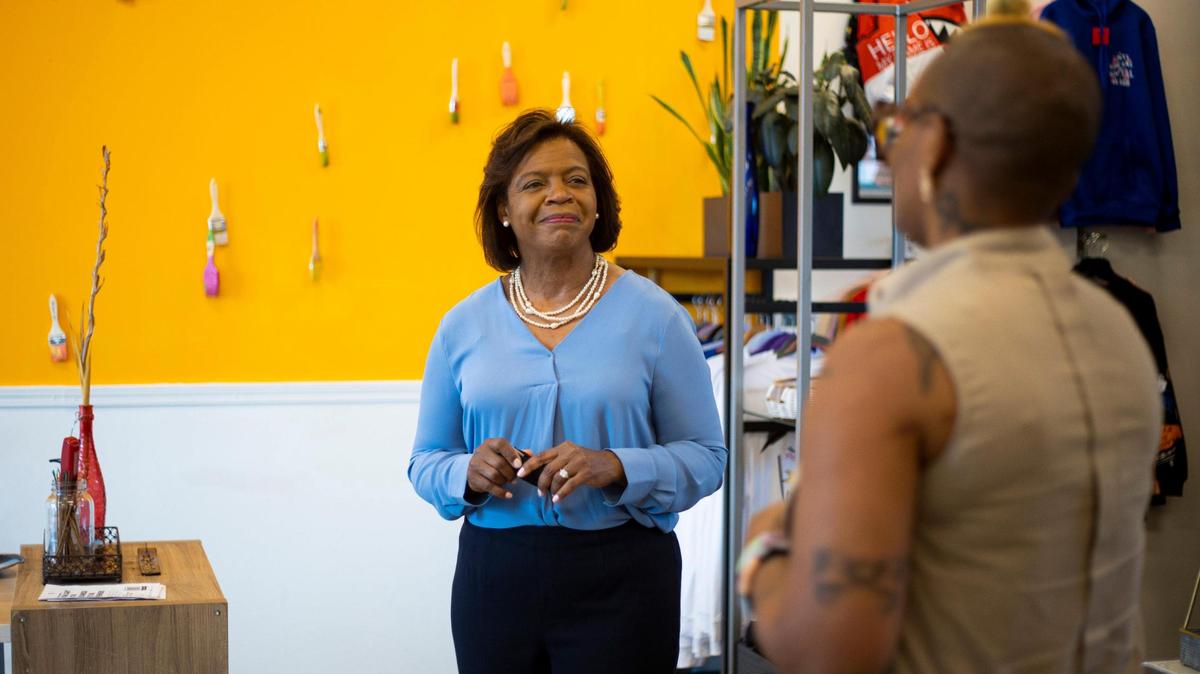
Jackson faces a total of eight other candidates, including Cheri Beasley, a former North Carolina Supreme Court Chief Justice, and Erica Smith, a former state representative.
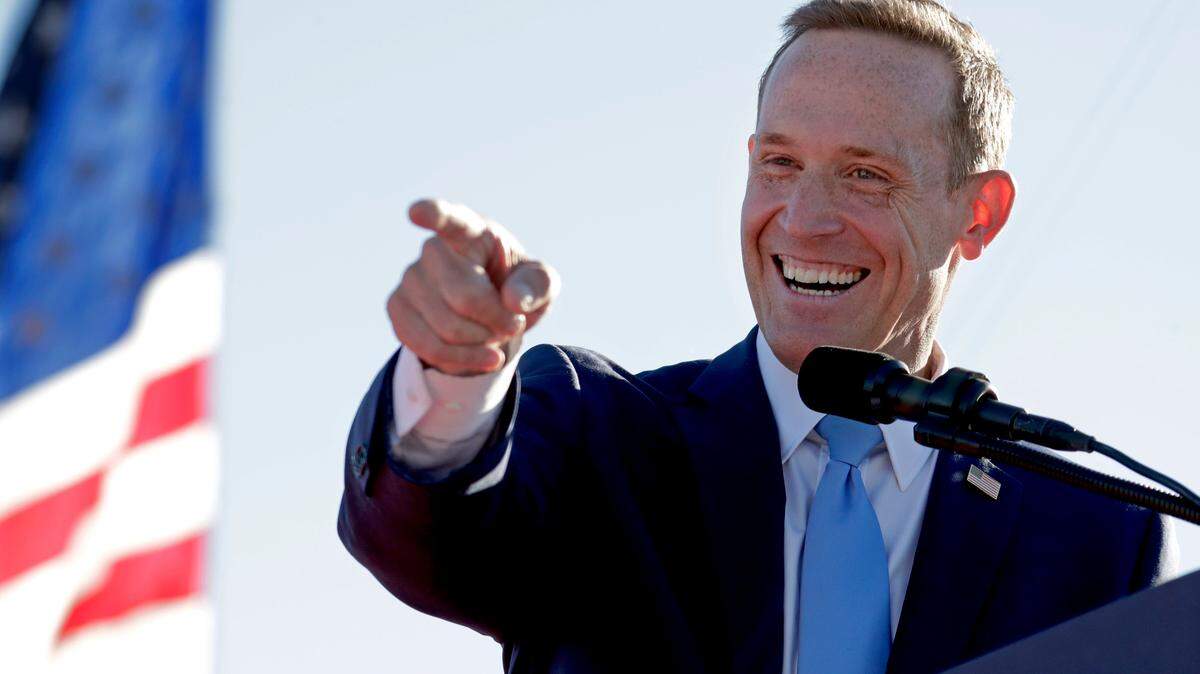
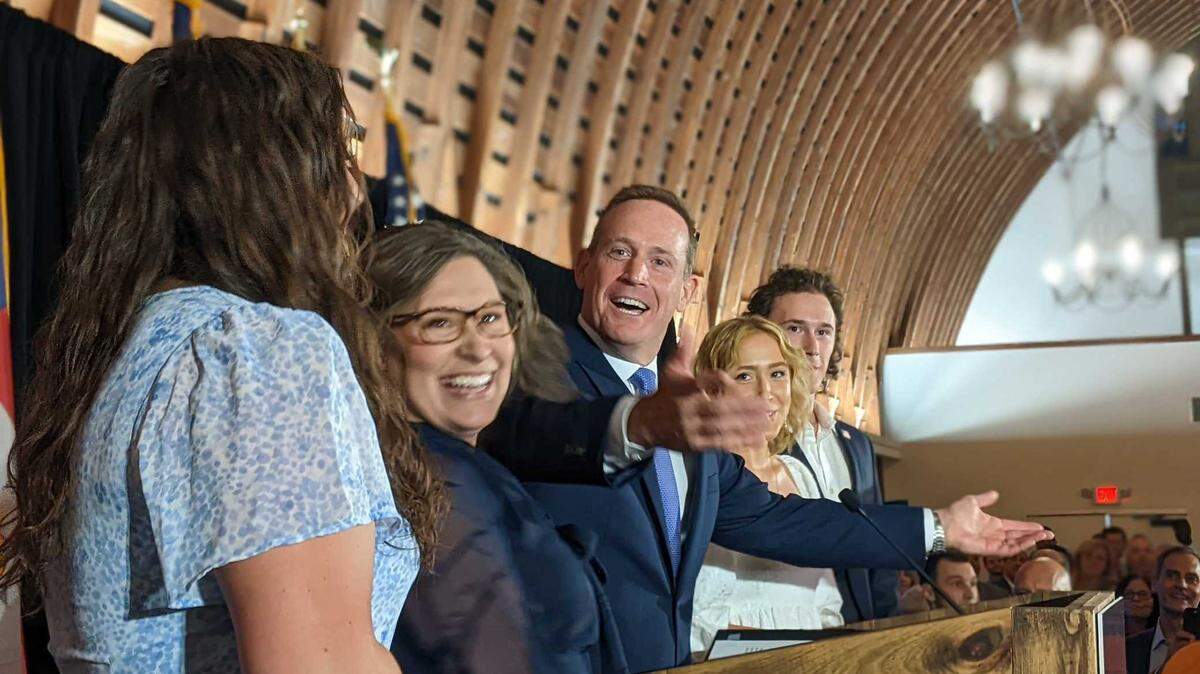
“I’m here as a shock of good faith to the system,” he told a crowd in Stanly County in mid-June.
‘Meet the people’
Jackson, 38, is more than a decade younger than his two most formidable primary opponents. His legislative record is limited to his seven years as a state senator from Charlotte. But his social media presence and personality have drawn a considerable amount of support and excitement from voters across the state.
Vernon Harrell, whose 117-year-old department store in Burgaw, Pender County, permanently shuttered during the pandemic, said Jackson hit on policy points that mattered to him, from supporting small businesses during tough times to better funding local health departments.
“It’s way too early, but I like what I heard,” he said.
Cooper, the political science professor, said Jackson is walking a line familiar to every politician running statewide: Getting the attention of enough primary voters while not alienating voters in the general election, who tend to be more moderate.
“I think Jackson’s strategy is one that could work well for that,” Cooper said. “He’s not saying a lot that’s going to draw a lot of ire from people on the right, or at least his temperament won’t.”
But despite what’s working in Jackson’s favor, Beasley scored the endorsements of at least 20 state representatives and five state senators — all people who worked shoulder-to-shoulder with Jackson in Raleigh. Those endorsements could play a factor as primary voters weigh their options, Cooper said.
During campaign stops, Jackson spends some time pitching himself as a North Carolina-first candidate, and particularly as one who wants to understand local problems outside of Charlotte. His commitment to a 100-county tour, he says, is evidence of that. At least one other Democratic candidate, Smith, is also embarking on a tour of every county.
That strategy has come back into fashion for political strategists in recent years, Cooper said.
In the age of social media and digital communication, many strategists turned to campaigns that focused on text messages and targeted online advertisements. Jackson and Smith, though, are opting for a statewide “meet the people” strategy.
Cal Cunningham, who lost in 2020 to U.S. Sen. Thom Tillis by about 100,000 votes, did not run a 100-county campaign. Cunningham’s shot at the Senate was also severely undermined by a sex scandal that become public a month about before election day.
2022 election
Jackson is white. His two main opponents are Black women.
If elected, Beasley or Smith would make history by becoming the first Black U.S. senator from North Carolina.
Asked why he should be North Carolina’s next senator as the nation grapples with racial tension and widespread activism for racial justice, Jackson points to his legislative record, saying it is the most extensive on racial justice issues.
But Jackson may have some convincing to do.
Susan Roberts, a political science professor at Davidson College, said many Democrats and donors may be wondering whether they should back a Black woman, and whether that could turn out a more enthusiastic electorate in the general election.
“Does North Carolina need to have a candidate that looks different? I think that’s a factor,” she said. “The Democrats, if they want to win this seat, need a candidate who can generate enthusiasm.”
During campaign stops, Jackson addresses racial justice issues as some of the most important parts of his platform. Gerrymandering, he said, is one of the biggest problems facing the state and the country. His number one priority, should he be elected, would be to pass a new Voting Rights Act.
How heavily North Carolina voters will weigh the candidates’ race or gender is unclear. Jackson said that, come election day, it will be his energy and his record that carries him. Still he acknowledges Democrats are not expected to win the general election.
“We have to change the math, and it’s going to take an extraordinary effort,” he said. “What we’re trying to do is show people that we’re ready to put forth that effort — starting now.”
This story was originally published July 1, 2021 at 1:57 PM.
.jpg)