I-77 still needs improving. With tolls dead, can Charlotte + NCDOT work together?
What’s next for I-77?
That’s perhaps the No. 1 question being asked after the funding agreement for the controversial Interstate 77 South toll lane project was revoked Wednesday night.
The surprise move by the Charlotte Regional Transportation Planning Organization has put an end to the $3.2 billion project.
The project’s been in the works for decades and would have added toll lanes to an 11-mile stretch of I-77 from uptown to South Carolina to ease congestion and reduce crashes.
The CRTPO vote caused a shockwave felt by elected officials, business leaders and residents. It was met with cheers, boos and, again, the major question of what now?
One thing is clear, the funding for the project is gone and the North Carolina Department of Transportation has stopped working on the project.
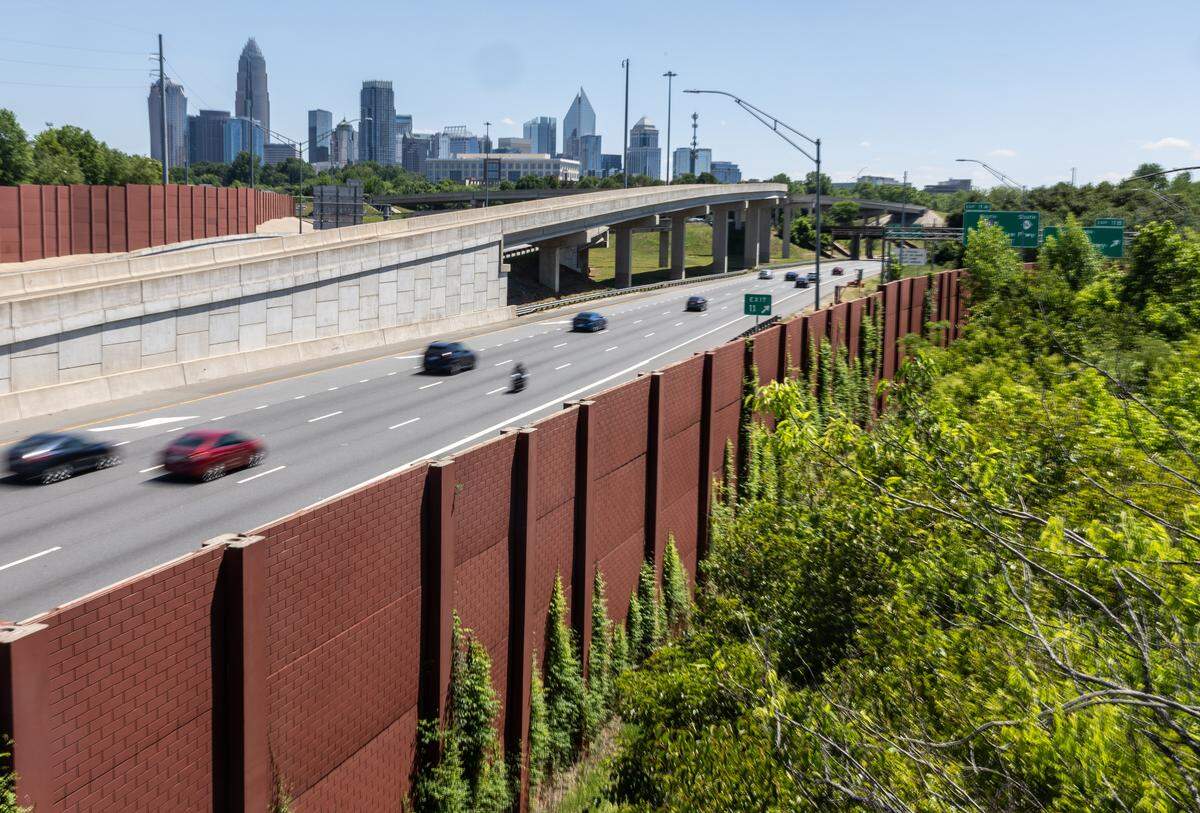
NCDOT allocated $600 million for the project, the state limit. The agency also was going to provide an additional $100 million that would have been spent on transportation projects of the city’s choosing.
Without the funding agreement, the state doesn’t have $3.2 billion to fund the roadway.
NCDOT said the combined $700 million would go back to the state coffers. The project would also be removed from the transportation improvement prioritization list.
When asked how quickly that will occur, NCDOT said it is still determining next steps. But in a public engagement email sent Friday from the agency, it seems like that action will be immediate.
The community engagement center the agency opened to address residents’ concern regarding transparency is closed. All future engagement events and discussions have been cancelled. And the agency is no longer working on acquiring property along the corridor, the email added.
Charlotte City Council members, along with CRTPO representatives, have said their vote doesn’t indicate nothing should be done to the corridor.
A reset is needed, officials said.
It’s unclear how NCDOT will work with the region on that reset. But with the project off the prioritization list, it could be decades before NCDOT looks at the roadway again.
Charlotte and CRTPO’s vote on I-77
To get to the “what’s next?” Here’s a quick “how did we get here?”
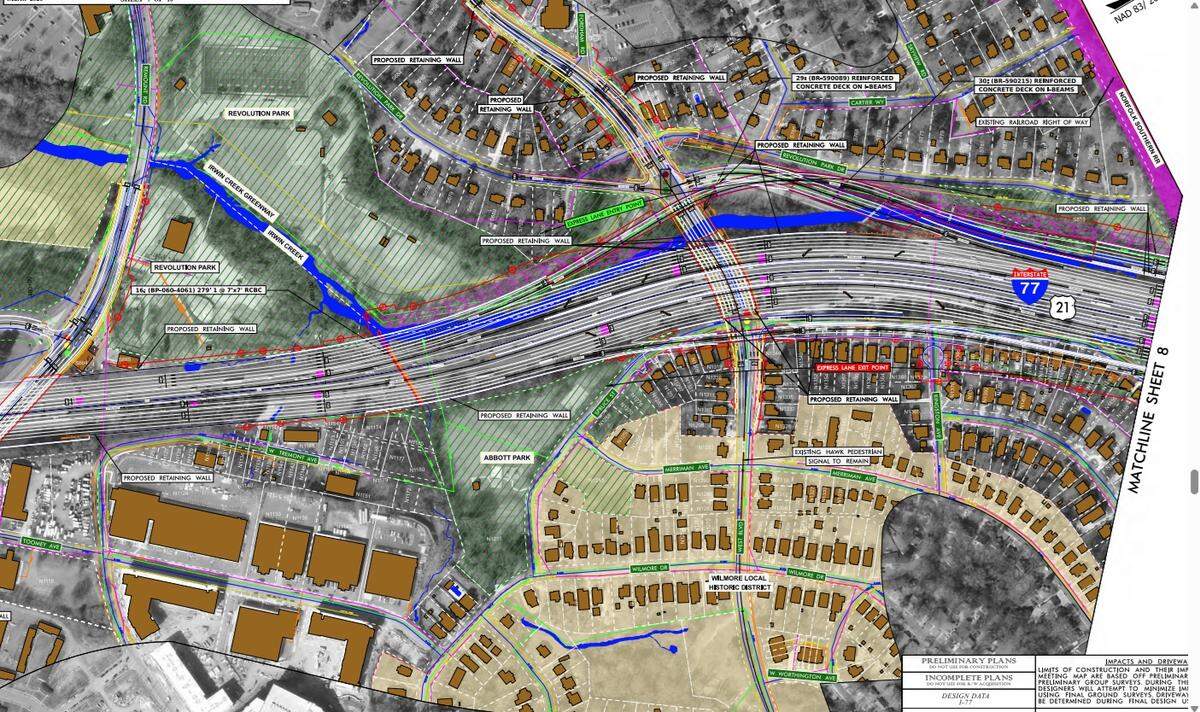
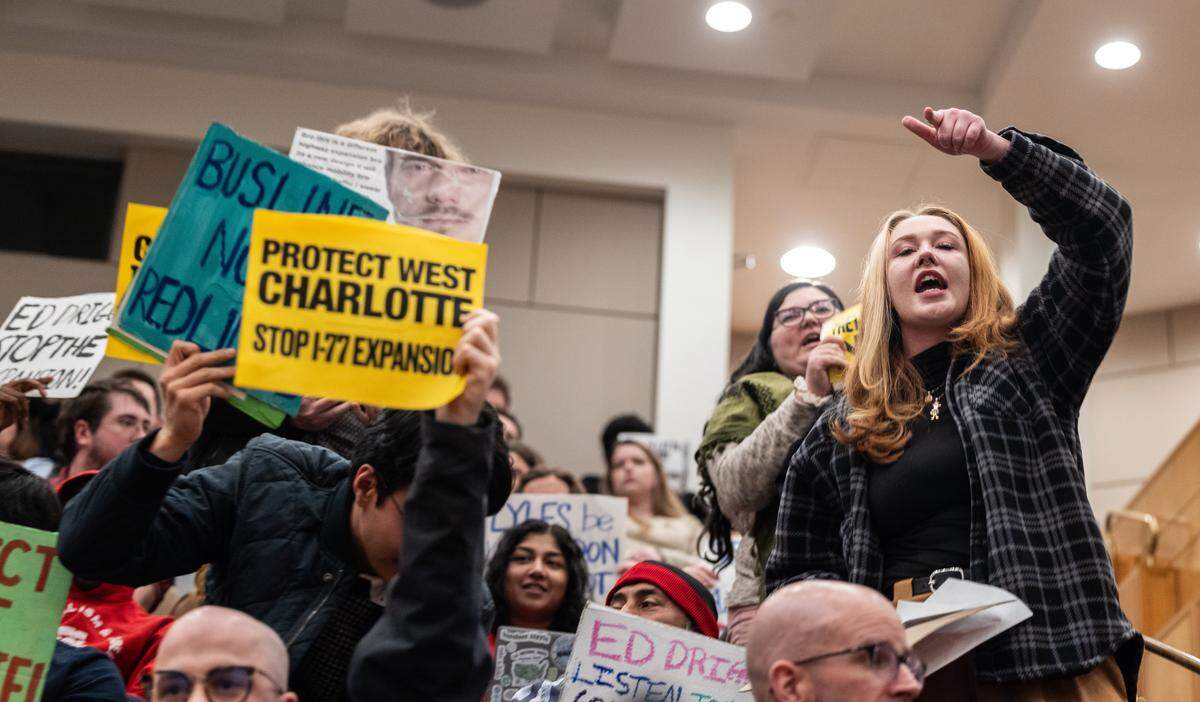
Residents have heavily opposed the I-77 South project since the North Carolina Department of Transportation released preliminary designs for the roadway in November. Those designs showed roadways through people’s homes, particularly in historically Black neighborhoods that have borne the cost of growth before.
Residents wanted to see more transparency and engagement from NCDOT. And the agency tried. It opened the community engagement center and held several community benefits meetings.
But the trust between residents and NCDOT was already lost, according to Charlotte City Councilman Malcolm Graham.
Yet members of the business community, including the Charlotte Regional Business Alliance, pushed for the project to move forward. The project was an economic investment, the nonprofit said.
And while the business community has long held strong sway on elected officials, some Charlotte City Council members and CRTPO representatives listened more to community members.
Charlotte City Council revoked its approval of the funding two weeks ago. CRTPO followed suit on Wednesday.
CRTPO’s vote felt surreal to Charlotte City Councilwoman Victoria Watlington.
“We don’t have a whole lot of examples of this kind of impactful and yet controversial vote landing on the side of the community versus maybe more so the establishment,” Watlington said. “If there is a concrete plan or something already in motion, there’s not a lot of appetite to say, ‘Wait a minute, we can make a different decision.’
“I think that we are moving away from this idea that it’s a business community. We’re all stakeholders here, and it’s not an either-or.”
What to do with I-77 South now?
Watlington and other representatives have been clear, congestion needs to be addressed. But not in the way NCDOT proposed.
“This is what was just not a good solution,” said Matthews Mayor John Higdon. He led CRTPO’s vote toward rescinding the funding. “We have a problem…(I-77S) is one of the worst bottlenecks in the state. I hope we can come back to the table and work collaboratively to solve this problem.”
Watlington agreed.
She’s pushing for Charlotte’s budget to include $300,000 to study I-77, in partnership with UNC Charlotte. The study would look at modeling and simulation techniques for land use planning.
Watlington hopes NCDOT will be a part of that study and provide funding through grants the agency has previously given to university research partners.
NCDOT did not answer a request for comment from The Charlotte Observer on whether it will be a partner in the study.
Higdon acknowledges that he isn’t a transportation engineer, but he’d like to see NCDOT think out of the box when it comes to improving the roadway.
His ideas include high-occupancy vehicle lanes, better micro-transit options, converting I-77 shoulders to lanes during peak times and providing incentives for carpooling and ride-sharing.
“I would like us to pursue non-tolled options,” Higdon said. “I’m concerned that Charlotte’s becoming the toll capital of the South. We just have too many tolls and at some point people are not going to want to be here because it’s so expensive to get around.”
But without the funding agreement, Charlotte City Councilman Ed Driggs said the conversation between the region and NCDOT is over.
NCDOT looks at transportation projects through a prioritization list. Projects are rated on a scale based on need and funding. While I-77 improvement is a need, there’s no funding.
“You do not un-rescind,” Driggs said. “Any attempt to improve I-77 would essentially have to start from scratch. It would go to the back of the line in the NCDOT pipeline of highway projects.”
In a statement, the business alliance agreed with Driggs.
“Two regional bodies have turned their backs on a project that they have been planning for two decades, backed by data, and critical to the economic future of this region,” said alliance president and CEO Robert McCutcheon.
Possible repercussions of I-77 revocation
Driggs, the business alliance and some CRTPO members questioned what actions the region could face from revoking the funding agreement.
NCDOT has already spent $60 million toward the project. Driggs said the state may try to recoup that funding.
NCDOT did not answer whether that would occur. Gov. Josh Stein’s office also did not respond to a request for comment.
“I think a lot of members of the legislature are going to look at what will seem to them to be an irrational decision for political reasons,” Driggs said. “The question then is, what do they do about that? Do we get into a situation where they start looking for ways to punish Charlotte?
“In this instance, I would have the feeling that the state was justified in thinking that the behavior of the city was unreasonable because of the costs and the benefits and the balance of the whole thing.”
N.C. Board of Transportation at-large member Stephen Rosenburgh has stated repeatedly that the move to rescind would look bad for the region and could have consequences.
During Wednesday’s meeting, CRTPO’s attorney Mujeeb Shah-Khan said revoking the funding agreement wasn’t illegal. But he would advise against it.
But Higdon believes it’s unlikely the state legislature would get involve in Charlotte’s affairs. Maybe, but unlikely.
“I don’t think we can make decisions based on hypotheticals like that,” Higdon said.
Watlington agreed. And she hopes the vote doesn’t deter NCDOT from working with the region on I-77.
“I would hope that in the course of conducting the city’s business and the region’s business, the process would indicate that there is authority at the local level to change our minds,” Watlington said. “NCDOT has repeated over and over that they want to continue partnering, and obviously they are the means by which we get transportation done on our state roads…
“It would be a shame if leaders from other parts of the state would retaliate against our region for making a bipartisan … conclusion about what’s best for our region.”
Reporters DJ Simmons and Nick Sullivan contributed to the reporting of this story.
This story was originally published May 26, 2026 at 5:00 AM.